

Why Fresh Roasted Coffee Tastes Better
Table of Contents
- What Makes Fresh Roasted Coffee Taste Better?
- The Coffee Degassing Process Explained
- The Peak Flavor Window: How Long Does Coffee Stay Fresh After Roasting?
- How to Store Coffee Beans for Freshness
- Visual Indicators of Stale vs. Fresh Beans
- Taste the Difference with Roast-to-Order Coffee
- Conclusion
- Frequently Asked Questions
Last Updated: September 8, 2026
What Makes Fresh Roasted Coffee Taste Better?
Coffee is a perishable product, and understanding why fresh roasted coffee tastes better starts with recognizing that the beans you buy are actively changing from the moment they leave the roaster. The difference between a bag roasted last week and one roasted six months ago is the difference between a vibrant, complex cup and a flat, lifeless one.
Fresh roasted coffee is defined by volatile aromatic compounds and gases that develop during roasting, responsible for tasting notes from bright citrus to deep chocolate. Roasting traps carbon dioxide inside the bean's cellular structure, creating internal pressure that makes the bean porous and ready for extraction. The key to an exceptional cup is brewing once the coffee reaches peak flavor potential, before those delicate compounds degrade.
The Coffee Degassing Process Explained
The coffee degassing process is the release of carbon dioxide from freshly roasted beans, directly impacting how your coffee extracts and tastes. Immediately after roasting, a bean contains high CO2 concentration. Brewing too soon lets that gas create a barrier that repels water, causing under-extraction and a sour, grassy cup, why most roasters recommend a resting period.
The roast profile dictates degassing time. A light roast is denser and degases more slowly, often requiring a longer rest; a dark roast is more porous, releasing gas faster and ready sooner. For espresso, a longer rest of 7 to 14 days is common because pressurized brewing is highly sensitive to gas levels (sca.coffee). For pour-over or drip, a rest of 3 to 7 days allows a vigorous bloom and consistent extraction.
The Peak Flavor Window: How Long Does Coffee Stay Fresh After Roasting?
The peak flavor window opens around day 3 and begins to close noticeably after day 14 (ncausa.org). While coffee is technically safe to drink for months, its flavor quality follows a steep curve. The aromatic compounds that create sweetness, acidity, and complexity are volatile, they evaporate and oxidize over time.
Here is a general timeline for whole bean coffee stored properly:
- Days 1-2: Beans are still degassing; flavors are often uneven and may taste slightly baked or grassy.
- Days 3-14: This is the sweet spot where the flavor profile is fully developed, offering the best clarity, sweetness, and body.
- Days 15-30: The coffee is still drinkable, but you will notice a loss of aromatic intensity and the finish may shorten.
- Months 2+: Staling becomes apparent; the coffee tastes flat, woody, or papery as the remaining volatile compounds degrade.
This timeline is why roast date matters more than the "best by" date. The staling process is relentless, driven by oxygen exposure and the degradation of lipids within the bean, which turns pleasant flavors rancid over time.
The Science of Lipid Oxidation: Why Stale Coffee Tastes Flat
Most discussions of coffee staling stop at carbon dioxide loss, but the deeper culprit is lipid oxidation. Coffee beans contain about 15-17% lipids by weight, primarily triglycerides, sterols, and tocopherols, which carry flavor precursors and contribute to perceived body and mouthfeel (PubMed).
Roasting expands the cellular structure, creating microscopic channels excellent for water extraction but exposing internal lipids to oxygen. Over time, oxygen reacts with unsaturated fatty acids, particularly linoleic acid, roughly 40% of lipid content, in a process called autoxidation.
Autoxidation is a free-radical chain reaction: an oxygen molecule abstracts a hydrogen atom from a fatty acid, creating a lipid radical that reacts with more oxygen to form a hydroperoxide, which breaks down into aldehydes, ketones, and short-chain hydrocarbons, precisely what you smell when coffee tastes "cardboard-like" or "woody." Some aldehydes are perceptible at parts per billion.
Lipid oxidation accelerates with heat, light exposure, and metal ions (which act as catalysts). Storing beans in a cool, dark place directly slows the chemical cascade that ruins flavor, beans stored at 70°F will stale noticeably faster than beans stored at 60°F, even in identical airtight containers.
The Role of Roast Level in Lipid Degradation
Roast level dramatically influences lipid oxidation. Dark roasts have a more porous structure because extended roasting breaks down more of the bean's cellular matrix, letting oxygen penetrate deeper and faster, a dark roast rich and chocolatey on day 5 may develop a rancid, oily note by day 18.
Light roasts retain more cellular integrity, slowing oxygen ingress and maintaining delicate floral and fruity notes for up to 4 weeks when stored properly. However, their higher acidity can catalyze hydrolysis of triglycerides, releasing free fatty acids that taste soapy or bitter as they accumulate.
Visual and Olfactory Cues of Lipid Degradation
You can train your nose to detect early lipid oxidation before coffee tastes fully stale. Fresh coffee has a bright, complex aroma with distinct fruit, floral, or nutty notes. As oxidation progresses, those top notes fade first, replaced by a dull, sweet smell reminiscent of old cooking oil. By the time you smell a distinct "rancid" note, lipid breakdown products have overwhelmed the remaining volatile aromatics.
For dark roasts, fresh beans show an even, glossy surface from oils that migrated during roasting. As oxidation proceeds, those oils become sticky and develop a dull, tacky film. Light roasts show less surface oil, but beans become progressively drier and more brittle, a sign that internal moisture and lipid structure are degrading.
Brewing Method Variance: How Freshness Requirements Differ
Not all brewing methods demand the same freshness. Espresso is the most demanding because high pressure (typically 9 bars) forces water through coffee rapidly, extracting solubles in 25-30 seconds. Beans too fresh (under 5 days) produce a thin, sour shot because CO2 interferes with even extraction; beans too old (past 20 days) produce a flat, bitter shot because lipids have oxidized and remaining solubles extract unevenly.
Pour-over and drip brewing are more forgiving. Lower pressure and longer contact time (2-4 minutes) dissolve flavors more gradually, extending acceptable freshness to about 3-4 weeks. French press, with full immersion and a metal mesh filter, is the most tolerant of slightly older beans because the coarse grind and extended steeping compensate for reduced gas content.
Cold brew is the outlier. The cold extraction process (18-24 hours in the refrigerator) is so gentle that it extracts fewer oxidized lipid compounds, so cold brew from slightly older beans can still taste clean. However, cold brew from very fresh beans (under 3 days) often tastes flat because low temperature cannot drive off excess CO2 that would escape during hot brewing.
This timeline is why roast date matters more than the "best by" date. The staling process is relentless, driven by oxygen exposure and the degradation of lipids within the bean, which turns pleasant flavors rancid over time.
How to Store Coffee Beans for Freshness
To protect your investment, know how to store coffee beans for freshness. The enemies are oxygen, light, heat, and moisture. Your goal is to slow the oxidation that destroys volatile flavor compounds.
The best storage method is an airtight, opaque container at room temperature. Do not store beans in the refrigerator or freezer unless for long-term storage, as moisture and odors will contaminate them. A bag with a one-way valve is an excellent storage vessel because it allows degassing without letting oxygen back in.
Visual Indicators of Stale vs. Fresh Beans
You can often assess bean quality before brewing. Fresh whole beans have a distinct sheen, though surface oil depends on the roast profile: dark roasts show an oily, glossy surface, while lighter roasts appear drier and matte. As beans age, they lose luster and become dull and dry-looking.
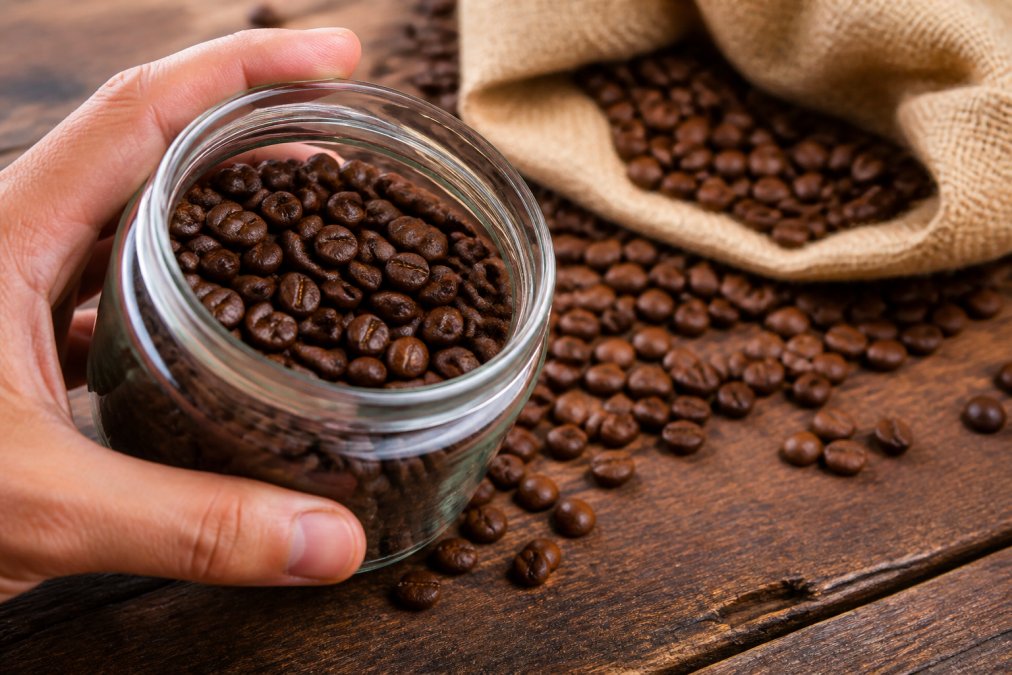
Aroma is another reliable indicator. Fresh beans should smell intensely of chocolate, nuts, fruit, or caramel, depending on origin. Stale beans smell flat, musty, or like cardboard. Finally, check the roast date on the bag, if there is no roast date, only a "best by" date, the roaster is likely not prioritizing freshness.
The Bloom Test: Your First Diagnostic Tool
The bloom is not just a ritual, it is a diagnostic. When you pour hot water (around 200°F) over freshly ground coffee, trapped CO2 escapes as bubbles. The vigor of this bloom tells you how much gas remains, which correlates with freshness.
Here is what to look for:
- Vigorous bloom (beans roasted 3-10 days ago): The grounds should swell and dome upward within 10-15 seconds, with visible bubbling that lasts 30-45 seconds. This indicates sufficient gas to promote even extraction.
- Moderate bloom (beans roasted 10-20 days ago): The grounds will rise slightly but the bubbling is less pronounced and fades within 20 seconds. The coffee will still brew acceptably, though you may notice slightly less aromatic intensity.
- Weak or no bloom (beans roasted over 3 weeks ago): The grounds barely rise, and few bubbles appear. This is a clear sign that degassing is complete and lipid oxidation has begun to flatten the flavor profile. The resulting cup will lack the bright, complex notes you would get from fresher beans.
Surface Oil Patterns: Reading the Bean's Skin
The appearance of oil on the bean surface is a nuanced indicator many coffee drinkers misinterpret. Here is what different oil patterns mean:
- Light roast, matte surface: Normal. Light roasts retain most oils internally because the bean structure is less damaged. A matte surface on a light roast does not indicate staleness.
- Light roast, patchy oil spots: This can indicate the bean was roasted too fast or stored in fluctuating temperatures, causing internal oils to migrate unevenly. The coffee may taste baked or flat.
- Medium roast, slight sheen: Ideal. A subtle, even sheen suggests the roast was well-developed and the oils are distributed consistently.
- Dark roast, glossy and oily: Normal for fresh dark roasts. The extended roasting process breaks down cell walls, allowing oils to surface. However, if the oil looks sticky or tacky rather than fluid, oxidation is underway.
- Any roast, dull and dusty appearance: The beans have lost moisture and the surface oils have oxidized. This is a strong indicator of staleness, regardless of the roast date printed on the bag.
The Grind and Aroma Test
Grinding reveals freshness more dramatically than whole beans. When you grind fresh beans, the aroma should be intense and immediate, filling the room within seconds. This burst of aromatics comes from ruptured cell walls releasing trapped volatile compounds.
With stale beans, grinding produces a noticeably weaker aroma, dusty, papery, or reminiscent of old cereal. This difference is not subtle; most people detect it immediately when comparing beans roasted within the past week against beans roasted two months prior.
The Crema Test for Espresso
If you brew espresso, the crema is a visual diagnostic tool. Fresh beans (rested 7-14 days) produce a thick, golden-brown crema with a hazelnut color and fine bubbles that persist for 30-60 seconds, with slight tiger-striping when properly extracted.
Beans too fresh (under 5 days) produce a thin, pale crema with large bubbles that dissipate quickly, excess CO2 disrupting extraction. Beans too old (past 3 weeks) produce a thin, dark crema lacking persistence, indicating the oils responsible for crema stability have oxidized.
A Practical Freshness Checklist
Before you brew, run through this quick checklist:
- Check the roast date: If it is more than 4 weeks old, expect diminished flavor.
- Inspect the surface: Look for even oil distribution appropriate to the roast level.
- Smell the beans: Fresh beans should have a pronounced, pleasant aroma.
- Grind a small amount: The aroma should intensify dramatically.
- Pour hot water and observe the bloom: A vigorous bloom confirms the beans are within their peak window.
This multi-sensory approach gives you confidence that you are brewing beans at their best, not just hoping they are fresh enough.
Taste the Difference with Roast-to-Order Coffee
The most reliable way to experience the difference is to buy from a roaster that prioritizes the roast date over shelf life. Roast-to-order services align with the science of degassing and the peak flavor window, ensuring beans arrive ready to brew. This is the model at Coffee Depot: your coffee is not brewed until you order it, then shipped directly to you for maximum freshness.
When you order whole beans or single-serve capsules from a service that roasts on demand, you eliminate the months of warehouse storage and shipping time that can degrade grocery store coffee. You can explore different origins and roast profiles with the confidence that you are tasting what the roaster intended. For those who want to compare a few different styles, a sample pack of curated blends is a practical way to find your favorite without committing to a full bag.

Conclusion
Freshness is not a marketing term; it is a measurable state of the bean that dictates brew quality. By understanding degassing, respecting the peak flavor window, and storing beans to limit oxygen exposure, you can consistently brew a cup with the clarity, sweetness, and aromatic complexity that stale coffee cannot deliver.
Most coffee on the shelf has already passed its peak before you buy it. Coffee Depot solves this by roasting only after you place your order and shipping directly to your door, so your beans arrive for maximum freshness. Explore our roast-to-order blends and taste what a truly fresh roasted coffee should be. Get started with Coffee Depot and transform your daily brew into a moment of pure joy.
Frequently Asked Questions
Why does fresh roasted coffee taste better than stale coffee?
Fresh roasted coffee tastes better because it retains the volatile aromatic compounds and oils created during the roasting process. These compounds are responsible for the complex flavors and aromas you smell and taste. Over time, oxidation and degassing cause these compounds to break down and escape, leading to a flat, dull, and often bitter cup. Fresh beans also produce a better crema and a more balanced acidity.
How long should I wait to drink freshly roasted coffee?
You should wait at least 24 to 72 hours after the roast date before brewing. This allows the coffee degassing process to release the large amounts of carbon dioxide trapped inside the beans. Brewing too early can lead to an inconsistent and sour extraction. However, for the best flavor, most coffees hit their peak between 4 and 14 days after roasting.
What are the signs of stale coffee beans?
Visual indicators of stale beans include a dull, dry appearance and a loss of the oily sheen that fresh beans have. The aroma will be flat or slightly musty instead of fragrant and sweet. When brewed, stale coffee produces a thin crema (for espresso) and tastes flat, papery, or overly bitter. The bloom, when hot water hits fresh grounds, will also be minimal or absent in stale coffee.