

How to Store Coffee Beans for Maximum Freshness
Table of Contents
- Why Coffee Bean Storage Matters for Your Brew
- The Four Enemies of Coffee Freshness: Air, Light, Heat, and Moisture
- Best Coffee Storage Canisters and Containers
- Step-by-Step: Storing Whole Beans for Peak Freshness
- Does Freezing Coffee Beans Ruin Them?
- How to Tell If Coffee Beans Are Fresh
- Common Storage Myths and What Actually Works
- Grind Just Before Brewing for Maximum Flavor
Last Updated: August 18, 2026
Why Coffee Bean Storage Matters for Your Brew
The moment coffee beans are roasted, they begin losing their peak flavor profile. Within days, oxidation and degassing break down the volatile compounds that make freshly roasted coffee exceptional. Proper storage is the difference between a cup that tastes alive and one that tastes flat.
At Coffee Depot, we roast to order and ship directly to you because we understand this window of opportunity. Most coffee drinkers unknowingly drink stale beans because they don't realize how quickly freshness fades once the bag is opened.
The good news: proper storage is straightforward. It requires understanding what damages coffee, choosing the right container, and following a few practical habits.
The Four Enemies of Coffee Freshness: Air, Light, Heat, and Moisture
Coffee's freshness depends on protecting beans from four specific threats.
Oxygen and Oxidation
Oxygen is the primary culprit in coffee degradation. When oxygen contacts the coffee oils and soluble compounds on the bean's surface, oxidation breaks them down into flat, bitter compounds. This accelerates dramatically once a bag is opened.
One-way valves on coffee bags allow carbon dioxide (released after roasting) to escape without letting oxygen back in. However, once you transfer beans to storage or open a bag repeatedly, that protection disappears. Airtight containers slow oxidation dramatically, the difference between beans in an airtight container versus an open bag is noticeable within one week.
UV Exposure and Light Damage
Light, particularly UV rays, degrades coffee oils and accelerates flavor compound breakdown through photodegradation. Opaque containers (ceramic, stainless steel, or dark glass) protect beans from light damage far better than clear glass, which looks beautiful but causes noticeably faster flavor loss.
If you prefer clear containers, store them in a dark cabinet or drawer rather than on an open shelf.
Temperature Fluctuations and Heat
Heat accelerates oxidation and breaks down flavor compounds. Temperature fluctuations are worse than consistent warmth, when beans expand and contract, they develop micro-cracks that expose more surface area to oxygen, speeding up staling significantly.
The ideal storage temperature is between 50-70°F in a consistent environment. Avoid kitchens near stoves, sunny windowsills, or anywhere with dramatic temperature changes.
Humidity and Moisture
Coffee is hygroscopic and absorbs moisture from the air. High humidity causes beans to absorb water, changing their weight, density, and extraction. It also creates conditions for mold if humidity exceeds 65%. Very dry air pulls moisture out, making beans brittle. The ideal humidity range is 40-60%.
Best Coffee Storage Canisters and Containers
Not all containers are created equal. The right vessel protects beans across all four damage vectors while remaining practical for daily use.
Airtight Containers with One-Way Valves
Airtight containers with one-way valves represent the gold standard for home storage. The valve allows carbon dioxide (released for 2-3 weeks after roasting) to escape without allowing oxygen back in. Look for containers specifically designed for coffee storage, they account for degassing and typically include better seals.
Quality matters. A reliable airtight container with a functioning valve keeps beans fresher for 3-4 weeks compared to 1-2 weeks in a standard container.
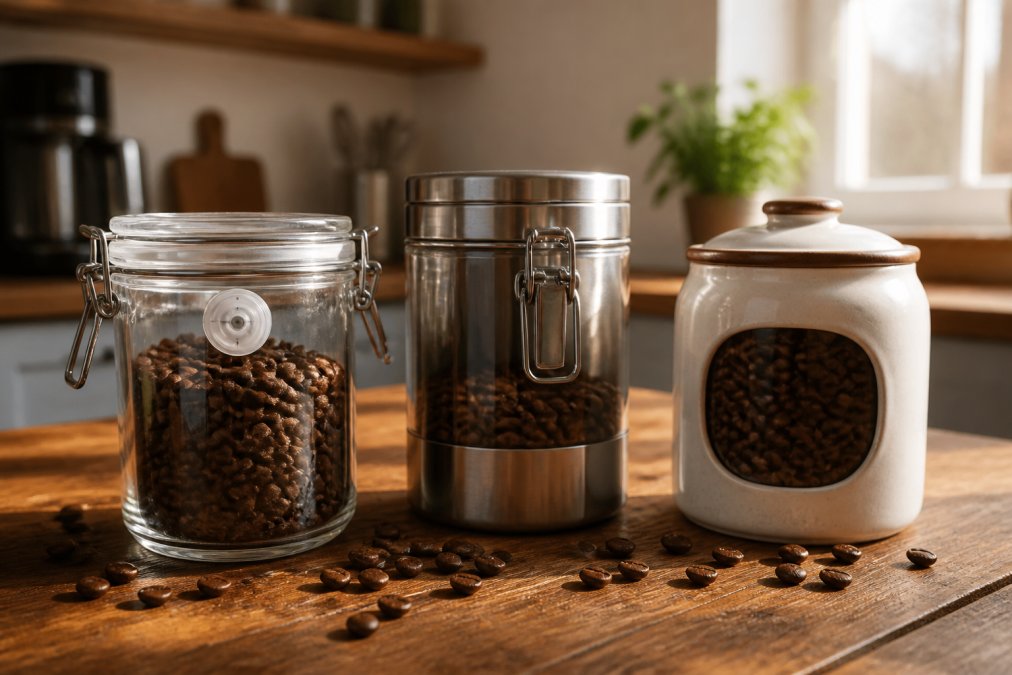
Opaque vs. Clear Storage Vessels
Opaque containers outperform clear ones for long-term freshness. Stainless steel, ceramic, and dark glass all block UV light effectively. Clear glass exposes beans to continuous light damage, especially on counters or lit shelves.
If you prefer clear containers for aesthetic reasons, store them in a dark cabinet or drawer.
Container Material Considerations
- Stainless steel: Excellent at blocking light and maintaining consistent internal temperature. Durable but more expensive.
- Ceramic: Provides good light blocking and insulation. More affordable but requires careful handling.
- Glass with opaque coating: Combines visibility with light protection if the coating is durable.
- Vacuum-sealed containers: Remove air entirely for maximum protection but are harder to use daily.
For most home brewers, a mid-range stainless steel or ceramic container with a one-way valve offers the best balance of protection, durability, and usability.
Step-by-Step: Storing Whole Beans for Peak Freshness
Proper storage follows a simple sequence that minimizes air exposure and maintains stable conditions.
Step 1: Choose Your Storage Location
Select a spot that stays consistently cool and dark. A pantry, cabinet, or drawer away from the stove and sunlight works best. The ideal temperature range is 50-70°F. Avoid the refrigerator.
Step 2: Transfer to an Airtight Container
Move beans from the original bag to your airtight storage container within 1-2 days of opening. Leave about an inch of headspace to allow for remaining degassing.
Step 3: Seal Out Air and Oxygen
Close the container completely and verify the seal is tight. If your container has a one-way valve, you should hear a slight hiss when you open it the next day, indicating the valve is working.
Step 4: Maintain Consistent Temperature
Keep the container in your chosen location and resist moving it around. Every temperature fluctuation accelerates staling.
Does Freezing Coffee Beans Ruin Them?
Freezing doesn't ruin beans but requires careful technique. Freezing dramatically slows oxidation and extends shelf life to 3-4 months instead of 3-4 weeks. However, the freezing process introduces a risk: moisture condensation.
When frozen beans warm up, condensation forms on the surface. If beans thaw slowly in a sealed container, that moisture can be reabsorbed. If they warm quickly or are exposed to air, the moisture evaporates and affects flavor.
Freeze beans in small portions in airtight containers, then thaw them in the sealed container at room temperature. Once thawed, use them within a week. For most home brewers, proper pantry storage keeps beans fresh long enough that freezing isn't necessary.
How to Tell If Coffee Beans Are Fresh
Freshness indicators help you determine whether your storage is working.
Visual and Aroma Indicators
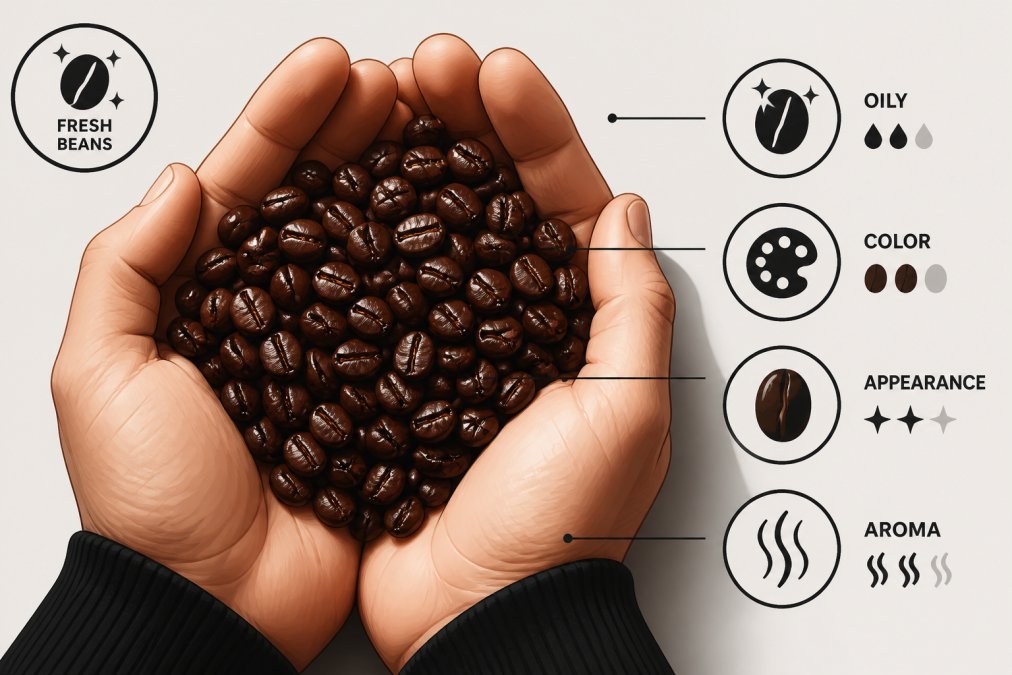
Fresh roasted beans have a visible sheen from coffee oils. The color is rich and vibrant. As beans age, the sheen fades and color becomes dull.
The aroma is the most reliable indicator. Fresh beans smell complex and aromatic when you open the container. Stale beans smell flat, muted, or musty.
Degassing and the Post-Roast Timeline
Beans begin degassing immediately after roasting and continue for 2-3 weeks. Peak freshness typically occurs 3-7 days after roasting. Beans remain quite fresh through day 14-21, then noticeably decline by day 30.
If you receive beans from Coffee Depot, use them within the first 2-3 weeks to capture the roaster's intended flavor profile.
Common Storage Myths and What Actually Works
Myth: The freezer is always the best option. Reality: Proper pantry storage in an airtight container is simpler and works perfectly for normal consumption rates.
Myth: You need to store beans in the original bag. Reality: Transfer to a dedicated container within days of opening.
Myth: More air exposure doesn't matter if you seal it back up. Reality: Every opening introduces oxygen and begins oxidation. Minimize opening frequency.
Myth: Refrigerator storage keeps beans fresher. Reality: Refrigerators create condensation and temperature fluctuations worse than stable pantry storage.
Myth: Any airtight container works equally well. Reality: Container material, seal quality, and valve functionality vary significantly.
Myth: Beans stay fresh indefinitely if stored perfectly. Reality: Even with ideal storage, beans noticeably decline after 4-6 weeks.
Grind Just Before Brewing for Maximum Flavor
This is where storage meets brewing. Grinding exposes the interior of the bean to oxygen and dramatically accelerates flavor loss.
Whole beans maintain their flavor for 3-4 weeks with proper storage. Ground coffee begins noticeably declining within hours and tastes significantly worse within 24 hours. If you grind the night before brewing, you'll taste noticeable flatness compared to grinding immediately before brewing.
Invest in a quality burr grinder and grind immediately before brewing. The extra 30 seconds makes a measurable difference in cup quality.
Keeping coffee beans fresh requires protecting them from oxygen, light, heat, and moisture while maintaining consistent storage conditions. Use an airtight container with a one-way valve, store in a cool dark location, and grind immediately before brewing. These practices preserve the complexity and brightness that make freshly roasted coffee exceptional. When you receive beans from Coffee Depot, roasted to order and shipped directly to you, these storage habits ensure you experience the full flavor profile the roaster intended.
Frequently Asked Questions
How long do coffee beans stay fresh after opening?
Once opened, whole beans maintain peak freshness for about 2 to 4 weeks when stored in an airtight container away from heat and light. After this window, they gradually lose aroma and flavor profile as oxidation accelerates. Pre-ground coffee stales much faster, typically within 1 to 2 weeks. Proper storage in an opaque, sealed vessel with minimal air exposure extends this timeline significantly compared to leaving beans in the original bag or a clear container.
Will a Ziploc bag keep coffee beans fresh?
A Ziploc bag provides basic protection but is not ideal for long-term freshness. While it blocks some air and moisture, it does not prevent all oxygen infiltration and offers no protection from light if the bag is clear. A dedicated airtight canister with a one-way valve, which allows carbon dioxide to escape during degassing without letting oxygen back in, is significantly more effective. If using a Ziploc, remove as much air as possible before sealing and store it in a dark pantry or cupboard.
Can you store coffee beans in the freezer without damaging them?
Freezing coffee beans is possible but requires careful handling. The main risk is freezer burn and condensation damage if beans thaw and refreeze repeatedly. If you freeze beans, use an airtight, opaque container and keep them frozen continuously, do not remove them repeatedly. Thaw only the amount you plan to use, then return the rest immediately to the freezer. For most home coffee drinkers, storing beans in a cool, dark pantry at ambient temperature is simpler and nearly as effective as freezing for preserving freshness over weeks.
What's the best material for a coffee storage canister?
Stainless steel and ceramic canisters are superior to glass for coffee storage because they block UV exposure completely, preventing light-induced flavor degradation. Glass, even if tinted, allows some light penetration. The ideal canister is opaque, airtight, and equipped with a one-way valve to allow carbon dioxide (produced during degassing) to escape without letting oxygen back in. Avoid plastic containers, which can absorb coffee oils and odors over time. Material thickness and seal quality matter more than the specific material itself.
This article was written using GrandRanker