

Roast to Order Coffee Delivery Service: 2026 Guide
Table of Contents
- What Roast to Order Coffee Delivery Service Actually Means
- Coffee Roast Dates Explained: What the Label Is Really Telling You
- How to Store Fresh Roasted Coffee Beans After Delivery
- Matching Your Roast to Order Coffee to Your Brew Method
- Coffee Subscription Cost Comparison: What You Actually Pay
- How to Choose a Roast to Order Coffee Delivery Service
- Conclusion
Last Updated: August 8, 2026
What Roast to Order Coffee Delivery Service Actually Means
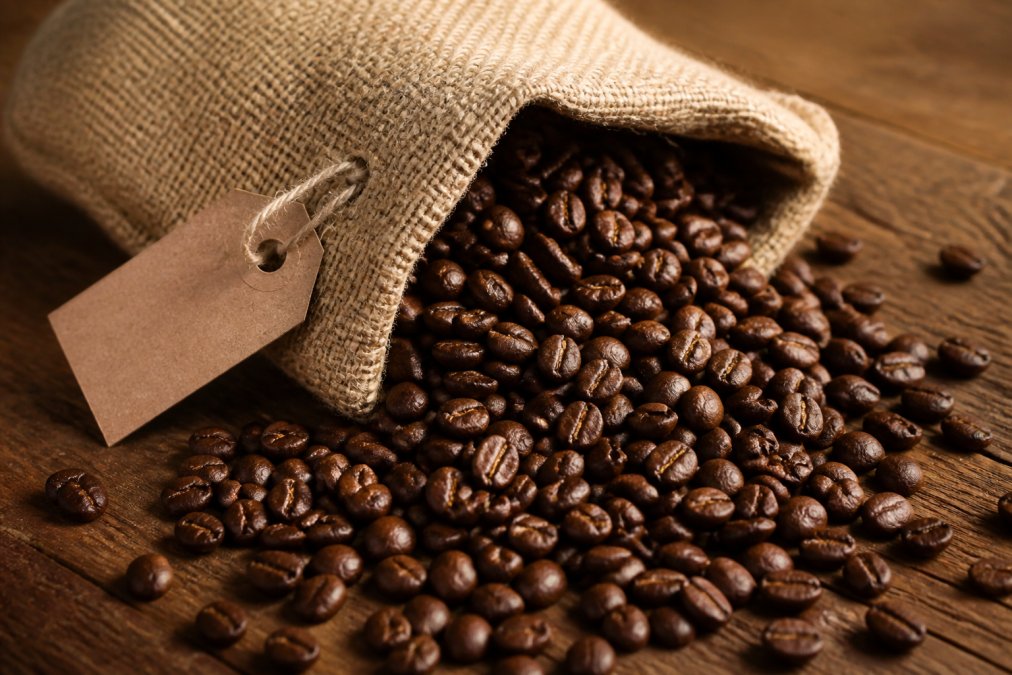
A roast to order coffee delivery service roasts beans only after you place your order, then ships them directly to your door within hours or days. Nothing sits in a warehouse. Coffee is perishable, once roasted, beans begin releasing carbon dioxide and oxidizing. The peak flavor window is real, and most grocery store coffee is already well past it by the time it reaches your cart.
At Coffee Depot, every bag is roasted to order and shipped directly to the customer, which means the freshness you get isn't a marketing claim, it's built into how the operation works.
How the Roast-to-Order Process Works
You place an order. The roastery schedules your beans for their next roast cycle. The beans are roasted, cooled, and immediately packaged in valve-sealed bags, then shipped within 24 to 48 hours of roasting.
Compare that to conventional retail: a roastery roasts in bulk, ships to a distributor, which ships to a retailer, where the bag sits until you buy it. That chain can take weeks or months. With roast-to-order, you're receiving beans that are days old, not months old.
The practical result is noticeably different: brighter acidity, more pronounced aromatics, and fuller mouthfeel, characteristics that fade with time.
The Science of Degassing: Why Resting Beans Matters
Freshly roasted coffee is not immediately ready to brew. During roasting, beans absorb carbon dioxide. After the roast, that CO₂ needs to escape, a process called degassing. If you brew too soon, the escaping gas disrupts extraction, producing an uneven, gassy, and often sour cup.
For most brewing methods, a rest period of 3 to 7 days after roasting produces the best results. Espresso typically benefits from 7 to 14 days, since pressure-based extraction is particularly sensitive to residual gas. Light roasts degas more slowly than dark roasts and generally need more time.
The "bloom" you see when you pour hot water over ground coffee, that initial puff of foam, is actually degassing in real time. A strong bloom signals freshness.
This is the central irony of roast-to-order coffee: the freshest beans you can buy still need a few days of patience before they're at their best. A good roaster will print the roast date on the bag so you can time it yourself.
Coffee Roast Dates Explained: What the Label Is Really Telling You
A roast date is the single most useful piece of information on a coffee bag. It tells you exactly when the beans were roasted, giving you everything you need to calculate freshness and plan your brew window.
Specialty roasters print roast dates as standard practice. If a bag doesn't have one, that's a signal the roaster isn't prioritizing freshness transparency.
According to guidance from the Specialty Coffee Association on coffee freshness standards, whole bean coffee is generally considered fresh for consumption within 2 to 4 weeks of the roast date when stored properly. Ground coffee degrades significantly faster.
Roast Date vs. Best By Date
A roast date tells you when the coffee was roasted. A best by date is a manufacturer's estimate of when the product will no longer meet minimum quality standards. The problem is that "minimum quality" is a low bar. Coffee can be technically drinkable well past its best by date while tasting flat and stale.
Use the roast date to calculate your own freshness window. For whole beans stored in a sealed, airtight bag away from heat and light, the peak flavor window is roughly 7 to 21 days post-roast. After 6 weeks, most volatile aromatics have dissipated.
Best by dates on commodity coffee are often set 6 to 12 months out. For roast-to-order coffee, the roast date is the only number that matters.
How to Store Fresh Roasted Coffee Beans After Delivery
Proper storage is where most people lose the freshness they paid for. The enemies of fresh coffee are oxygen, moisture, heat, and light.
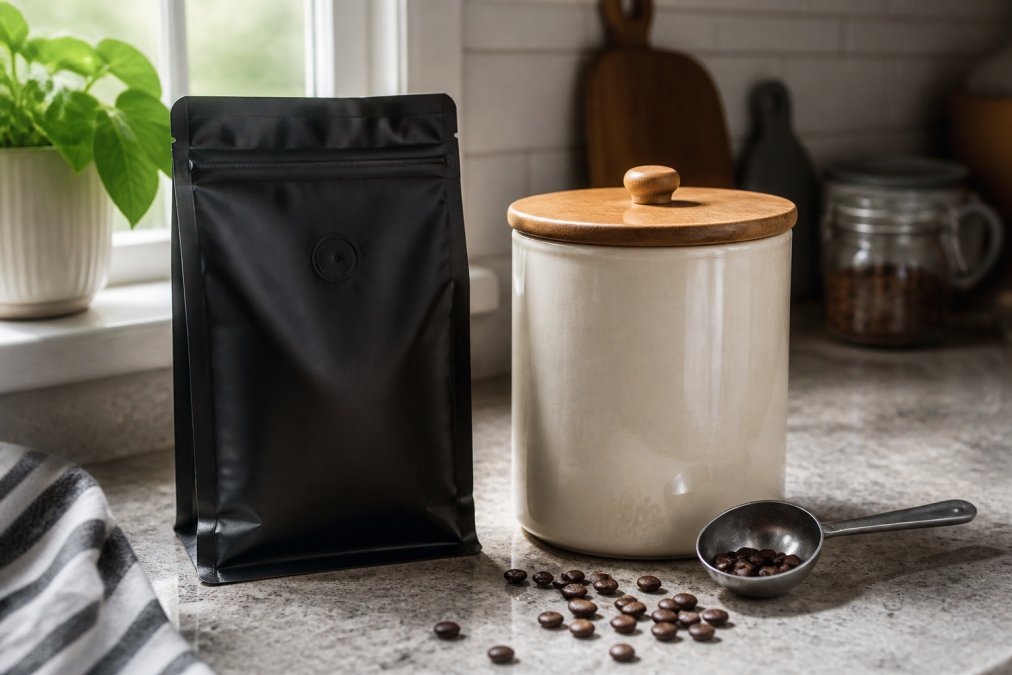
- Store beans in the original valve-sealed bag, pressing out excess air and folding the top down tightly after each use
- Keep the bag in a cool, dark location, away from the stove
- Do not refrigerate whole beans; temperature fluctuation and moisture accelerate staling
- Freeze only if storing longer than 3 weeks, in a sealed, airtight container in single-use portions
- Grind only what you need immediately before brewing
Packaging That Protects Freshness: What to Look For
Quality roasters use bags with one-way degassing valves, the small circular disc on the front of most specialty coffee packaging. This valve allows CO₂ to escape without letting oxygen in.
Look for these packaging characteristics:
- One-way degassing valve: Lets CO₂ out, keeps oxygen out
- Resealable closure: Zip-seal or fold-and-clip top that creates a tight seal
- Opaque material: Blocks light degradation
- Airtight construction: The bag should feel firm and hold its seal under light pressure
Vacuum-sealed bags remove oxygen entirely but require beans to be fully degassed first, which delays shipping. Most roast-to-order services use valve-sealed bags because they accommodate freshly roasted beans still actively degassing.
Matching Your Roast to Order Coffee to Your Brew Method
The biggest mistake people make with fresh specialty coffee is brewing it the same way they brew grocery store coffee. Fresh beans behave differently, and your brew method should reflect that.
| Brew Method | Recommended Roast Level | Rest Period | Notes |
|---|---|---|---|
| Pour-over | Light to medium | 5-10 days post-roast | Highlights acidity and floral notes |
| French press | Medium to dark | 4-8 days post-roast | Body and mouthfeel shine |
| Espresso | Medium to dark | 7-14 days post-roast | Needs full degassing for stable extraction |
| Cold brew | Medium to dark | 3-7 days post-roast | Long steep forgives slight under-resting |
| Drip/auto | Medium | 4-8 days post-roast | Most forgiving method overall |
For pour-over and manual methods, the bloom phase is especially important with fresh beans. Use twice the weight of coffee in water (e.g., 30g water for 15g coffee), pour slowly, and wait 30-45 seconds before continuing. This allows excess CO₂ to escape before main extraction.
Single-Origin vs. Blended Profiles by Brew Style
Single-origin coffees are sourced from one specific farm, region, or processing lot. They carry the distinct flavor signature of their origin, terroir, processing method, variety. A washed Ethiopian Yirgacheffe tastes dramatically different from a natural-process Brazilian Santos.
Blends combine beans from multiple origins to achieve a consistent, balanced flavor profile. A well-constructed blend like Coffee Depot's 6 Bean Blend, a bold dark roast from six carefully selected origins, is engineered for consistency, particularly for espresso.
- Single-origin coffees reward attentive brewing and are ideal for pour-over, Chemex, and AeroPress, where subtle flavor nuances can be appreciated.
- Blends are more forgiving and consistent, better for espresso, drip machines, and anyone who wants the same great cup every morning.
Coffee Depot's Single Origin Favorites Sample Pack ($24.99) includes six 2oz packs of their most popular single-origin coffees, a practical way to taste the difference before committing to a full bag.

Coffee Subscription Cost Comparison: What You Actually Pay
Understanding coffee subscription cost requires looking beyond per-bag price. Shipping, frequency, bag size, and flexibility all affect the real cost.
| Service Type | Typical Bag Size | Approx. Price Range | Subscription Required | Shipping |
|---|---|---|---|---|
| Direct roastery (single roaster) | 12oz | Varies by provider | Optional at most | Varies |
| Marketplace/curation service | 10-12oz | Varies by provider | Usually required | Often included |
| Premium small-batch roastery | 12oz | Varies by provider | Optional | Varies |
| Coffee Depot | 12oz whole bean | From $18.99 | No lock-in stated | Direct ship |
Coffee Depot's House Blend starts at $18.99 for a 12oz bag of medium roast whole bean coffee. The 6 Bean Blend, a bold dark roast built for espresso lovers, is also $18.99. The Best Sellers Sample Pack with six 2oz packs of their top coffees is $24.99, a smart entry point if you're deciding which roast profile you prefer.

Roast-to-order coffee costs more than grocery store coffee, reflecting the actual cost of small-batch roasting, fast shipping, and fresh beans. The question is whether it's worth it compared to what you'd pay at a specialty coffee shop for similar quality.
How to Choose a Roast to Order Coffee Delivery Service
Choosing a roast-to-order service comes down to five factors: freshness transparency, roast profile selection, subscription flexibility, shipping speed, and values alignment.
Freshness transparency means the roaster prints the roast date on every bag and ships within 24-48 hours of roasting. If a service can't tell you when your beans were roasted, that's a problem.
Roast profile selection matters because your ideal coffee depends on your brew method and taste preferences. Look for services offering light, medium, and dark roasts with clear tasting notes.
Shipping speed is directly tied to freshness. Beans roasted Monday and shipped Tuesday should reach most US addresses by Thursday or Friday.
Values alignment is increasingly important. Coffee Depot donates $1 from every item sold to charity, a tangible commitment built into the pricing model. For socially conscious buyers, this structural giving matters more than periodic one-off donations.
As noted by the National Coffee Association's consumer research, American coffee drinkers increasingly prioritize quality, origin transparency, and ethical sourcing when choosing where to buy.
Subscription Fatigue: Avoiding Commitments You Won't Keep
Subscription fatigue is real. Many buyers have been burned by services that locked them into monthly shipments or made cancellation unnecessarily complicated.
The smarter approach:
- Start with a one-time order before committing to any subscription
- Choose flexible frequency if you do subscribe. Bi-weekly or monthly options let you adjust based on consumption
- Confirm pause and cancel policies before subscribing. A trustworthy service makes these easy
- Track your consumption rate. If a 12oz bag lasts two weeks, monthly is right. If it lasts a week, bi-weekly makes more sense
Environmental Footprint of Shipping Fresh Coffee
Shipping individual bags has a real carbon footprint. However, consolidated direct-to-consumer shipping can be more efficient than the multi-leg supply chain of traditional retail when factoring in warehouse storage, regional distribution, and retail refrigeration.
Practical steps to reduce your footprint:
- Order in larger quantities less frequently rather than small orders more often
- Choose ground shipping over expedited when your freshness window allows
- Look for roasters using minimal, recyclable packaging
- Support roasters with direct trade relationships, which reduce overall transportation emissions
Choosing the right roast to order coffee delivery service requires evaluating freshness transparency, roast-date labeling, degassing science, brew method matching, and honest subscription terms. Coffee Depot makes the decision straightforward: every bag is roasted after you order, shipped directly to you, and backed by a charitable giving model that puts $1 from every item toward community support. Start with the Best Sellers Sample Pack or the Single Origin Favorites Sample Pack to find your roast profile, then order the full bags you'll actually look forward to brewing.
Frequently Asked Questions
What does roast-to-order coffee mean?
Roast-to-order coffee means the roastery does not roast your beans until after you place your order. Instead of pulling pre-roasted stock from a warehouse shelf, they roast a fresh batch specifically for you and ship it within 24 to 48 hours. This approach preserves the full flavor profile, acidity, and aroma that degrade quickly once beans are roasted and exposed to oxygen. The result is a noticeably fresher cup compared to grocery store coffee that may have been roasted weeks or months earlier.
How long does roast-to-order coffee stay fresh?
Whole bean roast-to-order coffee stays at peak flavor for about two to four weeks after the roast date when stored in a valve-sealed, airtight container away from heat, light, and moisture. Ground coffee loses freshness faster, typically within one to two weeks. After the peak window, the coffee remains drinkable but loses the bright acidity, mouthfeel complexity, and tasting notes that made it worth ordering fresh. Buying whole beans and grinding just before brewing extends the freshness window noticeably.
Does roast-to-order coffee need to rest before brewing?
Yes. Freshly roasted beans release carbon dioxide through a process called degassing, and brewing too soon produces a slightly hollow or sour cup because the CO2 interferes with water extraction. Most specialty roasters recommend resting light roasts for three to five days after the roast date and medium to dark roasts for one to three days. You will notice this during the bloom step: a vigorous, domed rise means the beans are still actively degassing and may need another day or two of rest.
Is a coffee subscription cheaper than buying from a grocery store?
Per ounce, specialty roast-to-order coffee typically costs more than mass-market grocery store beans. However, the comparison shifts when you factor in quality: specialty-grade arabica, small-batch roasting, and direct trade sourcing deliver a cup that grocery store options rarely match. Sample packs like Coffee Depot's Best Sellers Sample Pack at $24.99 for six 2oz packs let you explore multiple roast profiles before committing to a full bag, which is a cost-effective way to find what you love without overspending.
How do I choose the right roast-to-order coffee delivery service for my taste?
Start by identifying your preferred roast level: light roasts highlight bright acidity and fruit-forward tasting notes, while dark roasts deliver bold body and lower acidity. Next, decide whether you want single-origin coffees for terroir-driven flavor or blended profiles for consistency. Check whether the service prints roast dates on every bag, ships within 48 hours of roasting, and offers flexible ordering without mandatory subscriptions. If you are unsure where to start, a sample pack covering multiple origins and roast levels is the most practical first step.
Can I order roast-to-order coffee without committing to a subscription?
Many roast-to-order services, including Coffee Depot, allow one-time purchases so you are not locked into a recurring plan. This is ideal for remote workers or occasional coffee drinkers who want fresh beans on their own schedule. If you do opt into a subscription later, look for services that let you pause, skip, or cancel without penalties. Subscription fatigue is a real issue, so choosing a provider with genuinely flexible terms protects you from paying for coffee you do not need.
This article was written using GrandRanker