

Is Roast to Order Coffee Worth It in 2026
Table of Contents
- What Roast to Order Coffee Actually Delivers
- Benefits of Fresh Roasted Coffee vs. Store-Bought
- Coffee Freshness Timeline: How Long Does Roast to Order Stay Fresh
- The Real Cost: Pricing and Value Comparison
- Is Coffee Subscription Worth It for Your Routine
- Equipment You'll Need and Learning Curve Reality
- The Verdict: Who Should Choose Roast to Order
Last Updated: August 30, 2026
What Roast to Order Coffee Actually Delivers
Fresh-roasted coffee isn't marketing speak. When you order roast to order coffee, beans are roasted after you place your order, then shipped within days, fundamentally different from grocery store coffee sitting on shelves for weeks or months, where oxidation and degassing have already diminished flavor compounds.
At Coffee Depot, we've built our operation around this principle: your coffee doesn't get roasted until you order it. The difference between a bean roasted three days ago and one roasted three weeks ago is significant. Fresh-roasted beans release more aromatic oils, deliver brighter acidity, and showcase origin characteristics that specialty coffee is prized for.
The real question isn't whether fresh coffee tastes better, it does. It's whether that quality justifies the cost and inconvenience for your specific routine.
Benefits of Fresh Roasted Coffee vs. Store-Bought
Fresh-roasted coffee delivers measurable advantages over standard grocery store options, though the magnitude depends on how you brew and what you're comparing against.
The most obvious benefit is flavor clarity. Store-bought coffee has already undergone significant oxidation and degassing. The flavor profile flattens, losing brightness, subtle fruit notes, and complexity. Fresh-roasted beans peak within 7-14 days of roasting, with volatile and potent aromatic compounds (peer-reviewed research). Using good water, proper technique, and appropriate grind size, you'll taste the difference immediately.
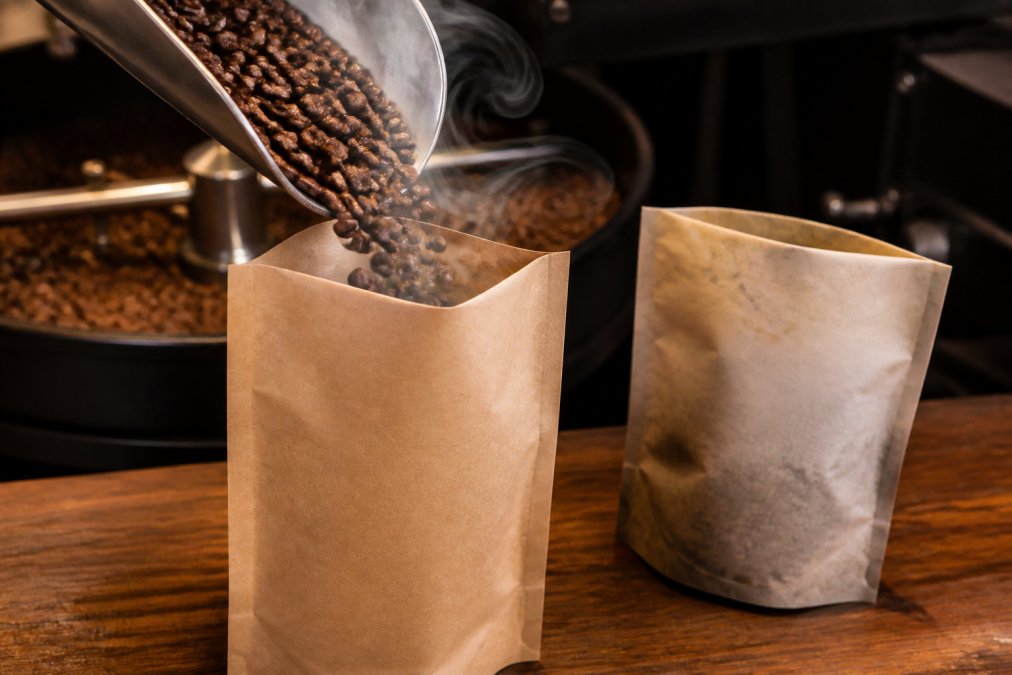
The second advantage is consistency. When you order from Coffee Depot, you know exactly when beans were roasted and control the degassing window. You're not gambling on warehouse or shelf time. The first 24-48 hours after roasting, CO2 escapes through degassing (peer-reviewed research). Brewing during this window produces excessive blooming and uneven extraction. By day 3-4, you're in the sweet spot. With store-bought coffee, you have no idea where in that timeline you are.
The third benefit is freshness at brewing time. Coffee Depot's roast-to-order model means beans are typically 3-5 days old upon arrival, maximum freshness. Store-bought grocery coffee could be 2-6 months old. After 30 days, flavor degradation becomes noticeable (peer-reviewed research). After 60 days, it's obvious.
Roasters operating on a roast-to-order model are typically smaller, focused operations roasting smaller batches more frequently. This means tighter control over roasting curves, more attention to bean quality, and faster feedback loops if something goes wrong.
Coffee Freshness Timeline: How Long Does Roast to Order Stay Fresh
Understanding the freshness timeline is critical to getting value from roast to order coffee.
Days 1-2 (Degassing Peak): Beans are still releasing significant CO2. Brewing immediately produces excessive blooming, uneven extraction, and a flat or sour cup. Most roasters recommend waiting at least 24 hours before brewing.
Days 3-7 (Optimal Window): Your roast to order coffee is at its best. Degassing has slowed enough for clean, even extraction, but aromatic compounds remain potent. Flavor is bright, acidity present, and origin characteristics shine through.
Days 8-14 (Still Good, Fading): Coffee is still excellent, but brightness dulls slightly and aromatic complexity becomes less pronounced. Casual drinkers may not notice; careful tasters will.
Days 15-30 (Acceptable, Noticeably Aged): Still drinkable and better than most store-bought options, but past its peak. Flavor flattens and subtle notes fade.
Beyond 30 Days (Degraded): Flavor degradation is obvious. Coffee tastes stale and aromatic compounds have oxidized.
Storage matters significantly. An opened bag in a standard kitchen cabinet degrades faster than one in an airtight container in a cool, dark place. Light, heat, and oxygen exposure accelerate oxidation.
The Real Cost: Pricing and Value Comparison
Roast to order coffee has higher upfront costs than grocery store coffee, but the comparison isn't straightforward.
Coffee Depot's Best Sellers Sample Pack runs $24.99 for six 2-ounce bags (roughly $26.65 per pound). Single-origin and blend options like the 6 Bean Blend or House Blend are $18.99 per 12-ounce bag (about $25.32 per pound). These prices are competitive within specialty roast-to-order space but significantly higher than grocery store coffee ($5-7 per pound).

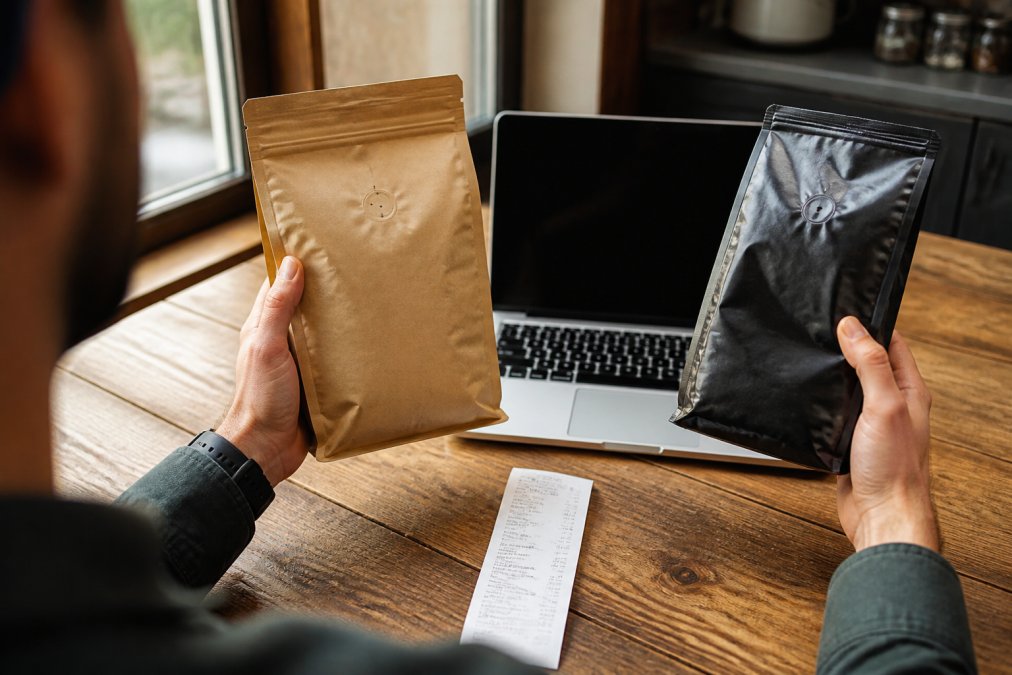
The value question depends on three factors: how much coffee you drink, how much you care about flavor, and what you're comparing against.
If you drink one cup a day: A 12-ounce bag yields roughly 15-18 cups. At $18.99, that's about $1.05-1.27 per cup. Specialty coffee shops charge $4-6 per cup. Grocery store specialty coffee runs $10-15 per pound. Roast-to-order is cheaper than cafés and competitive with mid-tier grocery options.
If you drink three cups a day: A 12-ounce bag lasts 5-6 days. You're buying 5-6 bags monthly at $18.99 each, roughly $95-115 per month. Compare that to $30-50 monthly for decent grocery coffee, and the premium is significant.
The subscription question: Coffee Depot doesn't require subscriptions. You order whenever you want without monthly commitments. This flexibility costs slightly more per unit than subscriptions but eliminates overcommitment risk.
Coffee Depot donates $1 from every item sold to community support. On a $24.99 sample pack, that's roughly 4% going to community causes, a genuine benefit beyond the price tag.
Is Coffee Subscription Worth It for Your Routine
Subscriptions work if you drink coffee consistently (4-5+ cups weekly), have a favorite roast, and want guaranteed freshness without reordering. Subscriptions remove friction and ensure you never run out.
Subscriptions don't work if you're experimental (wanting to try different roasts frequently), have irregular consumption, or are price-sensitive. Subscriptions lock you in. If you travel for three weeks, you're paying for undrunk coffee.
Coffee Depot's flexible approach lets you order when you want. Try the Best Sellers Sample Pack ($24.99) to explore profiles without committing. Order the same blend monthly or rotate through different origins. This appeals to people wanting freshness without subscription friction.
The real question is whether the freshness premium justifies cost relative to your alternatives. If your alternative is grocery store coffee at $6-8 per pound, the answer is almost certainly yes. If it's specialty coffee from a local roaster at similar prices, consider whether Coffee Depot's convenience and flavor profiles match what you'd get locally.
Equipment You'll Need and Learning Curve Reality
One overlooked aspect of roast to order coffee is what you need to brew it well. Beans are only half the equation.
If you're already a coffee enthusiast with decent equipment, you're set. A burr grinder, brewing method (pour-over, French press, AeroPress, espresso machine), and scale are all you need.
If you're new to specialty coffee, you'll need to invest. A decent burr grinder runs $40-150. A pour-over setup costs $15-50. A 0.1-gram scale is $20-40. An electric kettle with temperature control is $30-80. Total entry cost: $105-320.
The learning curve is real but manageable. You need to understand grind size, water temperature (195-205°F is ideal), and brew time variation. Weigh coffee and water for consistency. Understand the degassing window to avoid brewing off-gassing beans.
Most people figure this out in 2-4 weeks of regular brewing. The barrier isn't intellectual, just practice.
Equipment investment is a real consideration in the value equation. Once you have it, it lasts. You're not replacing your grinder or scale monthly.
The Verdict: Who Should Choose Roast to Order
Roast to order coffee is worth it if you meet at least three of these criteria:
You care about flavor enough to notice the difference between fresh and stale coffee. Some people taste coffee and think "it's coffee." Others notice brightness, acidity, and origin characteristics. If you're in the second group, fresh-roasted beans justify the premium.
You drink enough coffee that per-cup cost is acceptable. One cup daily? The premium is noticeable but manageable. Three cups daily? You're looking at $100+ monthly.
You have or will buy decent brewing equipment. You don't need a $500 espresso machine. A $100-150 setup (grinder, dripper, scale, kettle) is enough. Using a Mr. Coffee drip machine won't let you taste freshness benefits.
You value your chosen roaster's specific flavor profiles or philosophy. Coffee Depot's expertly curated blends appeal to people wanting sourcing and blending work done for them. If you prefer experimenting, you might prefer roasters offering more customization.
You appreciate non-coffee benefits. Coffee Depot donates $1 from every item sold to community causes.
Roast to order coffee isn't worth it if you're primarily motivated by price or convenience. For cheapest coffee, grocery options are better. For most convenient coffee, subscription services with auto-shipment are better. Roast to order occupies a middle ground: better than grocery coffee, more flexible than subscriptions, but more expensive and requiring more engagement.
For most coffee enthusiasts, freshness and flavor benefits justify the cost. For casual drinkers, standard options are probably fine.
The choice between roast to order coffee and other options hinges on how much you value freshness and flavor against cost and convenience. If you're ready to experience genuinely fresh, expertly roasted coffee, Coffee Depot's roast-to-order model delivers. Start with the Best Sellers Sample Pack to explore different profiles without committing to a full-size bag. Each purchase supports community causes through our $1 per item donation program. Get started and taste the difference fresh-roasted beans make.
Frequently Asked Questions
How long does roast-to-order coffee stay fresh after it arrives?
Roast-to-order coffee peaks in flavor within 3-7 days of roasting. Unopened bags remain fresh for 30-45 days if stored in a cool, dark place. Once opened, consume within 7-10 days for best results. The roast date on your package lets you track freshness precisely, something store-bought coffee rarely offers.
Is roast-to-order coffee significantly better than store-bought?
Yes, roast-to-order coffee tastes noticeably better because it reaches you within days of roasting, before oxidation and flavor degradation occur. Store-bought coffee may be weeks or months old by the time you brew it. You'll notice brighter acidity, cleaner flavor notes, and fuller body. The difference is most obvious in single-origin coffees, where the processing method and origin characteristics shine through. For most coffee enthusiasts, the roast-to-order advantage is clear.
Do I have to commit to a monthly subscription, or can I order whenever I want?
Many roast-to-order services, including Coffee Depot, offer flexible ordering without mandatory subscriptions. You can purchase individual bags or sample packs like the Best Sellers Sample Pack ($24.99) or Single Origin Favorites Sample Pack ($24.99) whenever you want. This flexibility appeals to remote workers and busy professionals who prefer control over their ordering schedule rather than being locked into recurring charges.
What makes roast-to-order worth the shipping cost compared to buying at a specialty coffee shop?
Roast-to-order can be more cost-effective than buying individual cups at specialty shops. A 12oz bag from Coffee Depot costs $18.99, while a single cup at a specialty cafe costs $4-6. If you brew at home regularly, roast-to-order becomes cost-effective within 4-5 cups. You also gain convenience: beans arrive at your door, freshly roasted, without travel time. The trade-off is waiting 3-5 days for shipping versus instant gratification at a cafe.
This article was written using GrandRanker