

Charity Coffee Brands That Donate Proceeds
Table of Contents
- Why Choose Coffee That Gives Back
- Ethical Coffee Brands Making a Real Difference
- Fair Trade Coffee Benefits and Impact
- How Donation Percentages and Transparency Work
- Verifying Charitable Claims: What to Look For
- Subscription vs. One-Time Purchase: Which Gives More
- How to Choose Your Charity Coffee Brand
- Conclusion
Last Updated: August 28, 2026
Why Choose Coffee That Gives Back
Every coffee purchase is an opportunity to support causes that matter. Charity coffee brands that donate proceeds transform your daily ritual into meaningful action, allowing you to contribute to nonprofits, environmental conservation, and community development without sacrificing quality or taste.
Consumers increasingly demand transparency about where beans come from and what happens after purchase. Brands that embrace genuine philanthropy stand out from those using charitable claims merely as marketing. This guide explores how to identify truly ethical coffee brands, understand their donation models, and choose one that aligns with your values.
At Coffee Depot, we recognize that socially conscious consumers want more than empty promises. That's why we've built our entire model around accountability, donating $1 from every item sold to charity, maintaining transparent sourcing, and ensuring every bean meets our exacting standards.
Ethical Coffee Brands Making a Real Difference
True ethical coffee brands operate with transparency at every level. They publish impact reports, disclose their supply chain, and explain exactly how much of your purchase goes to charitable work. Look for companies that provide specific information: which nonprofits they support, what percentage of profits go to charity, how they verify their claims, and whether they conduct independent audits.
The best ethical coffee brands typically focus on one of several impact areas: supporting coffee farmers through direct trade relationships, funding environmental conservation projects, advancing social justice initiatives, or serving veteran-owned enterprises. The key is understanding which cause resonates with you and verifying that the brand actually delivers on its promise.
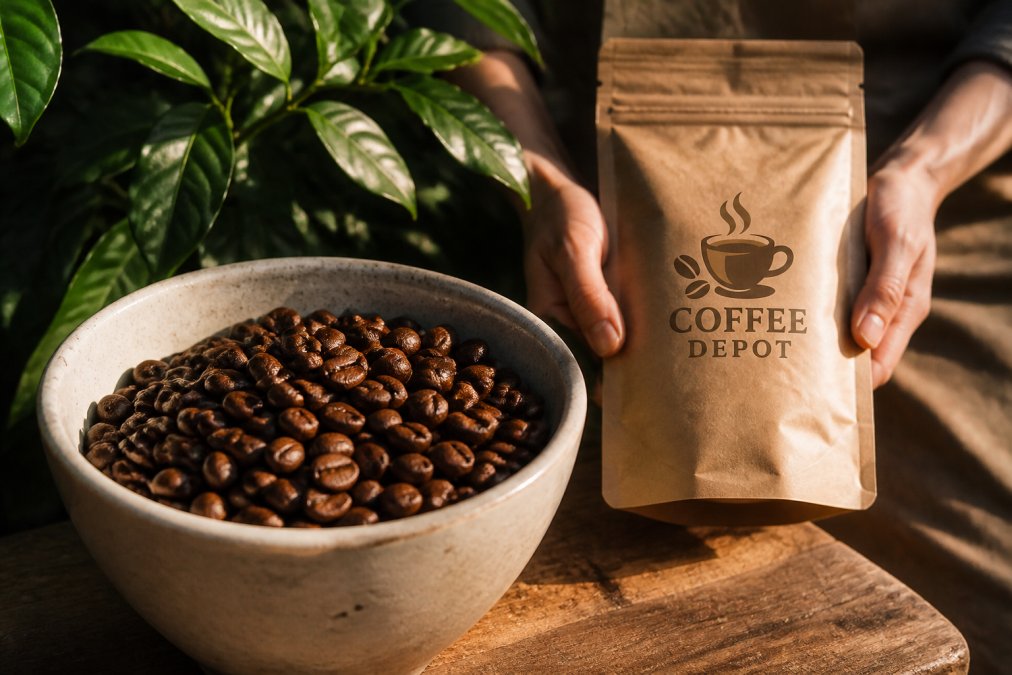
Coffee Depot exemplifies this commitment. Our expertly curated blends are roasted to order and shipped directly to you for maximum freshness. We donate $1 from every item sold to charity, and we maintain complete transparency about where those funds go. When evaluating ethical coffee brands, examine their sourcing practices. Brands that invest in sustainable agriculture and fair trade certification typically demonstrate deeper commitment than those offering commodity-grade beans with a donation attached.
Fair Trade Coffee Benefits and Impact
Fair trade certification ensures farmers receive equitable compensation and work under safe conditions (fairtrade.net). Fair trade organizations set minimum prices, prohibit child labor, and require environmental stewardship. Benefits extend beyond farmers: fair trade coffee typically comes from sustainable agriculture practices that reduce chemical inputs, protect biodiversity, and combat climate change.
However, fair trade certification isn't the only ethical framework. Direct trade relationships between roasters and farmers sometimes deliver greater impact, cutting out middlemen and allowing higher percentages of your purchase to reach the source. Some brands combine fair trade certification with additional direct relationships to maximize both transparency and farmer income.
Understanding these distinctions matters because they affect where your money ultimately goes. A charity coffee brand might use fair trade beans and donate additional proceeds to a nonprofit, creating multiple impact streams from a single purchase.
How Donation Percentages and Transparency Work
One of the most misunderstood aspects of charity coffee marketing is the difference between donating a percentage of revenue versus a percentage of profit. This distinction fundamentally changes what a brand is actually giving away.
Revenue vs. Profit: The Critical Difference
Revenue is the total money a brand collects from all sales. Profit is what remains after subtracting all costs: beans, roasting, packaging, labor, shipping, rent, utilities, and marketing. A brand that donates 10% of revenue is committing to a much larger dollar amount than one donating 10% of profit.
Example: A coffee brand sells 1,000 bags per month at $15 each, generating $15,000 in revenue. If their costs total $12,000, their profit is $3,000. Donating 10% of revenue means $1,500 per month. Donating 10% of profit means only $300 per month, five times less. Transparent brands specify which metric they use.
Flat-Dollar Models vs. Percentage Models
Some brands sidestep this ambiguity entirely by committing to a flat dollar amount per item sold. "We donate $1 from every bag" is unambiguous, you know exactly what your purchase contributes. This model is easier for consumers to understand and verify. Percentage-based models introduce variability: during peak seasons, percentage donations may grow; during downturns, they shrink. Flat-dollar commitments are more predictable for nonprofits trying to budget and plan programs.
How to Spot Vague Language
Be cautious of brands using phrases like "we donate our proceeds" or "profits go to charity" without specifying the percentage or dollar amount. If a brand won't state whether they're donating 5% or 50%, assume they're hiding something.
Verification Through Public Records
If a brand claims to donate to a specific nonprofit, you can verify the claim by checking the nonprofit's IRS Form 990, filed annually and publicly available through the IRS website or nonprofit databases like GuideStar. Look for the coffee brand's name in the Form 990's revenue section. If the claimed donations don't appear, the brand either isn't donating as claimed or is donating under a different legal entity name.
For brands that donate a percentage of profit, ask to see their annual financial statements or a third-party audit. If a brand refuses to provide financial evidence, that's a significant red flag.
Verifying Charitable Claims: What to Look For
Skepticism is healthy when evaluating charity coffee brands. Here's how to separate genuine commitment from marketing fiction using concrete verification methods.
Step 1: Confirm the Nonprofit's Legal Status and Legitimacy
Start by verifying that the organization the brand claims to support actually exists and is registered as a nonprofit. Visit the IRS Tax Exempt Organization Search tool and search for the nonprofit by name. Once you've confirmed the nonprofit exists, visit its official website directly and look for a clear mission statement, contact information, annual reports, and a link to their Form 990 filing.
Step 2: Review Form 990 to Verify Donations
Every nonprofit filing as a 501(c)(3) must submit an annual Form 990 to the IRS (irs.gov). This document shows total revenue, how funds were spent, names of major donors, and detailed program descriptions. Access Form 990 filings through GuideStar, ProPublica's Nonprofit Explorer, or the nonprofit's website. Look for the coffee brand's name in the donor list. If the brand claims to donate $10,000 annually but doesn't appear on the nonprofit's Form 990, the donations either aren't happening or are being made under a different entity name.
Pay attention to the nonprofit's program expense ratio. Legitimate organizations typically spend 75-90% of revenue on programs and 10-25% on administration (charitynavigator.org).
Step 3: Request and Review the Coffee Brand's Impact Report
Reputable charity coffee brands publish annual impact reports detailing total dollars donated, how donations were allocated, specific outcomes, and third-party verification statements. When reviewing impact reports, look for specificity. "We donated $50,000 to environmental causes" is vague. "Our $50,000 donation funded the restoration of 200 acres of native grassland in partnership with The Nature Conservancy" is concrete and verifiable.
Step 4: Check for Third-Party Certifications and Audits
Some coffee brands submit to independent audits or partner with third-party platforms that track and verify donations. Common certifications include B Corp Certification, Fair Trade Certification, and Charity Navigator or GuideStar Seals. Be cautious of brands that create their own "certifications" without verifiable third-party backing.
Step 5: Contact the Nonprofit Directly
Call or email the nonprofit and ask whether they have a partnership with the coffee brand, how much they've donated, and what those funds supported. Legitimate nonprofits welcome these inquiries because they're proud of their partnerships. If the nonprofit seems unfamiliar with the coffee brand or unable to provide details, that's a serious red flag.
Red Flags That Indicate Questionable Claims
- Brand won't name specific nonprofits or uses vague language
- Nonprofit doesn't appear in IRS database or has no verifiable website
- Coffee brand's name doesn't appear on nonprofit's Form 990 despite claimed donations
- No impact report available or report lacks specific metrics
- Brand refuses to provide financial documentation or third-party verification
- Nonprofit staff is unfamiliar with the partnership
- Donation amounts have declined significantly without explanation
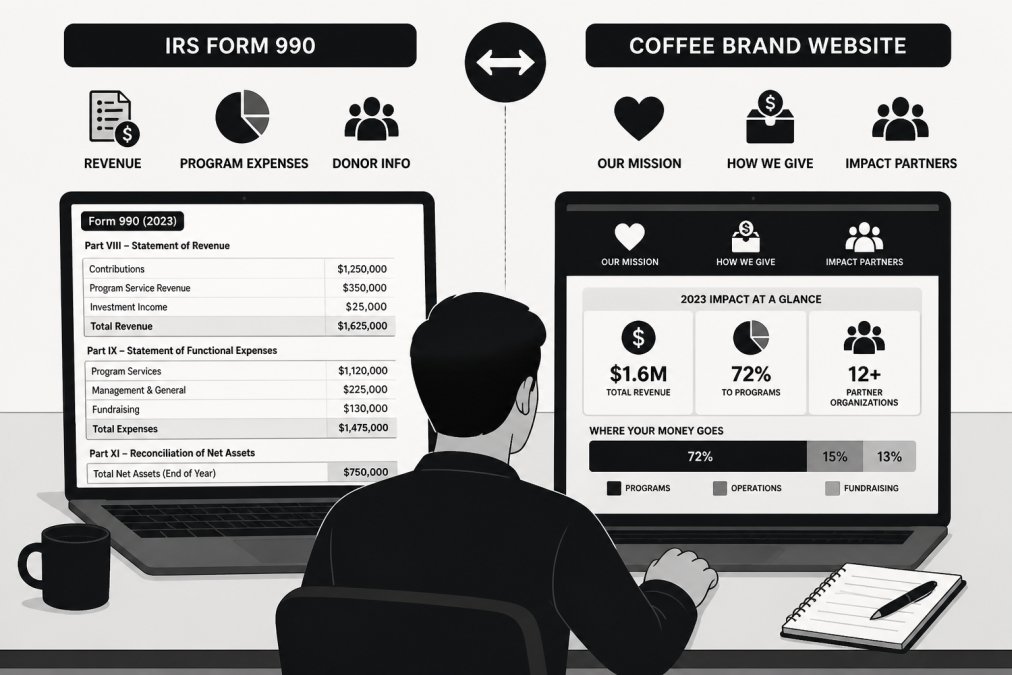
Verifying charitable claims requires effort, but the process is straightforward: confirm the nonprofit exists, check Form 990, request impact documentation, look for third-party verification, and contact the nonprofit directly. Brands that make this verification easy are demonstrating genuine commitment.
Subscription vs. One-Time Purchase: Which Gives More
Subscription models create greater total impact because recurring purchases contribute far more annually than single purchases. Subscriptions also ensure consistent donations to causes, creating predictable funding streams that nonprofits can depend on for planning.
The downside is commitment. Subscription services require ongoing enrollment, which some customers find inconvenient. One-time purchases offer flexibility, allowing you to try different roasts and donate without long-term obligation.
From a charitable impact standpoint, the math favors subscriptions. A customer who subscribes for a year and contributes more than someone making three one-time purchases. The best approach depends on your habits and preferences. If you drink coffee consistently and have found a roast you love, subscription makes sense. If you like variety or aren't ready to commit, one-time purchases let you support causes without subscription friction.
How to Choose Your Charity Coffee Brand
Start by identifying which causes matter most to you: environmental conservation, supporting small farmers, veteran empowerment, or social justice initiatives. Different brands align with different missions.
Next, research the brand's transparency practices. Visit their website and look for specific information: which nonprofits they support, how much they donate per item, how they verify donations, and whether they publish impact reports. Brands that make this information easy to find demonstrate genuine commitment.
Compare the quality of their coffee. Charitable giving shouldn't mean sacrificing taste. Read customer reviews, check their sourcing practices, and understand their roasting philosophy. Consider logistics and pricing, evaluating shipping costs, subscription requirements, and whether the brand's pricing aligns with your budget.
Finally, start with a small commitment. Order a single bag or try a limited subscription to experience the product firsthand before committing further.
Coffee Depot makes this evaluation simple. Our expertly curated blends are roasted to order and shipped directly to you, ensuring maximum freshness. We donate $1 from every item sold to charity, with complete transparency about where those funds go. You can order without subscription, try multiple roasts, and experience the difference that truly fresh coffee makes, all while supporting meaningful causes.
Choosing a charity coffee brand means aligning your daily ritual with your values. The best brands combine exceptional quality with genuine philanthropic commitment, verified through transparent practices and measurable impact. Coffee Depot delivers on both fronts: premium, roast-to-order coffee paired with a straightforward donation model that puts $1 from every purchase toward causes that matter. Start exploring charity coffee brands today and transform your morning brew into meaningful action.
Frequently Asked Questions
Q: How do charity coffee brands actually donate proceeds?
A: Charity coffee brands donate proceeds through several methods: a fixed dollar amount per item sold, a percentage of revenue, or direct partnerships with nonprofit organizations. Most transparent brands publish annual impact reports detailing where donations go. Some donate to social justice initiatives, environmental conservation, or community development. The key is verifying these claims through the company's website, third-party certifications, or financial audits rather than taking marketing statements at face value.
Q: What's the difference between fair trade coffee benefits and charitable donations?
A: Fair trade coffee ensures farmers receive fair compensation and work under ethical conditions, addressing supply chain transparency and economic empowerment. Charitable donations, by contrast, direct a portion of profits to external causes like nonprofits or global health initiatives. A coffee brand can be fair trade without donating to charity, or donate to charity without fair trade certification. The best ethical coffee brands combine both approaches for maximum social impact.
Q: How can I verify if a coffee company actually donates the money they claim?
A: Request the company's impact report or financial audit documenting donation amounts and recipient organizations. Check if they hold third-party certifications like B Corp status, which requires transparency. Look for specific numbers: 'We donated $50,000 to X nonprofit in 2025' is more credible than vague claims. Visit the nonprofit's website to confirm the partnership. Avoid brands that mention donations only in marketing copy without supporting documentation or verifiable nonprofit relationships.
Q: Should I choose a subscription or one-time purchase for maximum charitable impact?
A: Subscriptions typically generate more total charitable impact over time since recurring purchases accumulate donations. However, one-time purchases still contribute immediately. Some brands offer higher donation percentages for subscriptions to encourage recurring revenue. If you commit to a subscription, your total annual impact may exceed occasional purchases. Consider your budget and coffee consumption before committing; a brand that donates 10% of a purchase you actually use is more impactful than a subscription you abandon.
This article was written using GrandRanker