

Why Store-Bought Coffee Tastes Stale
Table of Contents
- Why Store-Bought Coffee Tastes Stale
- How to Tell If Coffee Is Stale
- The Best Way to Store Coffee Beans
- Why Coffee Roast Date Importance Matters
- Whole Bean vs. Pre-Ground: A Freshness Comparison
- Brewing Adjustments for Older Beans
- How Fresh Roasted Coffee Delivers Better Flavor
- Conclusion
Last Updated: August 14, 2026
Why Store-Bought Coffee Tastes Stale
Store-bought coffee tastes stale because it sits on shelves for weeks or months after roasting, losing its most flavorful compounds through oxidation and degassing. The moment coffee is roasted, a clock starts ticking. Fresh roasted coffee has a dramatically different flavor profile than coffee sitting in a warehouse or retail shelf.
At Coffee Depot, we've spent years analyzing what separates truly fresh coffee from the stale beans dominating grocery store shelves. This guide walks you through the science of why store-bought coffee tastes flat and bitter, how to spot stale beans before you brew them, and what genuinely fresh coffee should taste like instead.
Oxidation and Flavor Loss
Oxidation is the primary culprit behind stale coffee flavor. When coffee beans are roasted, they develop hundreds of volatile aromatic compounds that create complex flavors. The moment roasting stops, oxygen begins breaking down these compounds, transforming bright, nuanced flavors into flat, one-dimensional tastes.
Think of oxidation like rust forming on metal. The delicate oils and aromatic compounds in coffee beans oxidize when exposed to air, a process that accelerates in grocery store environments where beans sit in permeable packaging under fluorescent lights, exposed to temperature fluctuations and humidity changes.
Most grocery store coffee has already lost 40-60% of its aromatic compounds before you even open the bag. This explains why the same bean from a specialty roaster tastes completely different from the same bean purchased at a supermarket, the difference is time and oxidation, not the bean itself.
Degassing and Carbon Dioxide Release
Immediately after roasting, coffee beans release carbon dioxide (CO2) through a process called degassing. Specialty roasters design one-way valves into their bags to allow CO2 to escape while preventing oxygen from entering.
Grocery store coffee packages often lack proper one-way valves or use cheap valves that don't seal effectively, allowing oxygen to flood in while CO2 escapes and accelerating oxidation. By the time store-bought coffee reaches retail shelves, much of the degassing has already completed during weeks in warehouse storage.
Degassing matters for extraction. When you pour hot water over fresh beans, residual CO2 creates tiny bubbles that help distribute water evenly through the grounds, improving extraction and bringing out brighter flavors. With stale beans that have fully degassed, water flows through more unevenly, resulting in under-extraction and flat, bitter coffee.
The Grocery Store Supply Chain Reality
The grocery store coffee supply chain is built for shelf stability, not freshness. Coffee is roasted in bulk, packaged, shipped to distribution centers, sorted into regional shipments, and delivered to stores where it sits until purchase. This entire process typically takes 4-8 weeks.
During this time, beans experience temperature swings, light exposure through packaging windows, odor seepage from nearby products, and humidity fluctuations. All of these factors compound oxidation and degrade flavor.
How to Tell If Coffee Is Stale
Visual and Sensory Signs
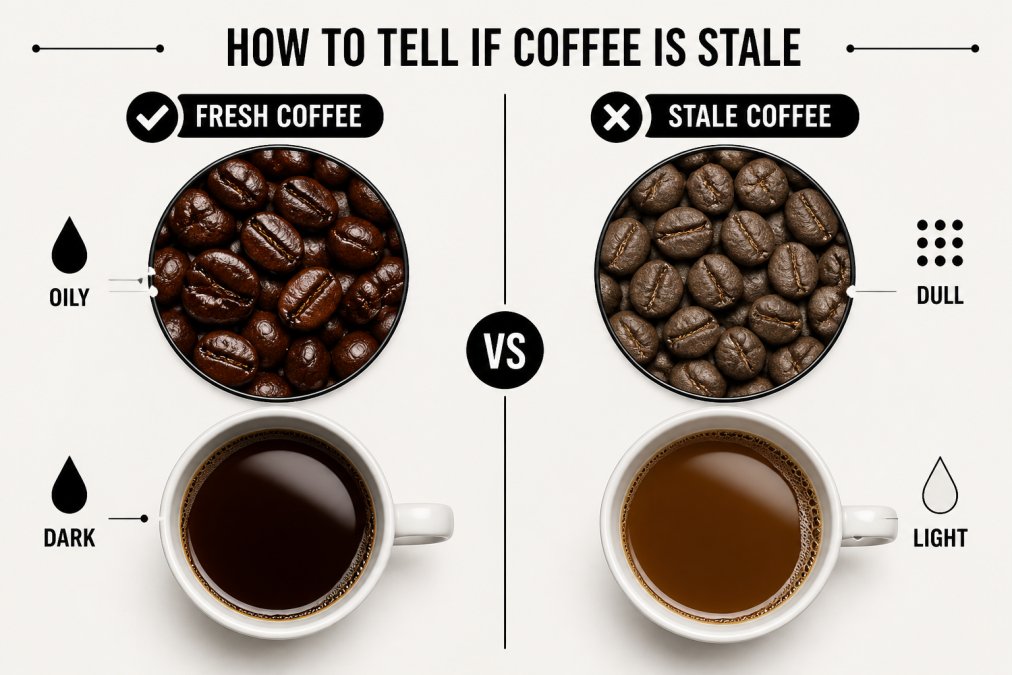
Stale coffee shows several visual and sensory red flags. Fresh beans have a rich, consistent color and visible surface oils (especially on darker roasts). Stale beans look dull and flat, with a grayish cast.
Smell is your most reliable indicator. Fresh coffee has an intense, complex aroma, fruity, floral, nutty, or chocolatey depending on the origin and roast. Stale coffee smells muted and flat. When you grind stale beans, the aroma is weak or nearly absent, while fresh grounds release an immediate, powerful smell.
Taste is the final confirmation. Stale coffee tastes bitter, thin, and one-dimensional, lacking the brightness, sweetness, and complexity of fresh coffee.
Stale vs. Expired: Understanding the Difference
"Stale" and "expired" are not the same thing.
Stale means the coffee has lost flavor and aromatic compounds through oxidation and age. Stale coffee is still safe to drink and won't make you sick, it simply tastes bad. Coffee can be stale within 2-3 weeks of roasting.
Expired means the coffee has developed harmful bacteria or mold, or the fats in the beans have gone rancid to the point of toxicity. This is rare with whole beans kept in proper storage but can happen if beans are stored in humid conditions for many months or exposed to moisture.
In practice, whole beans stored in an airtight container away from light and heat will taste stale long before they become expired. Pre-ground coffee oxidizes much faster and can develop rancid flavors within 1-2 weeks, even in sealed packaging.
If your coffee tastes bad but smells normal and was stored properly, it's stale, throw it out because life's too short for bad coffee. If it smells rancid or musty, treat it as expired and discard it.
The Best Way to Store Coffee Beans
Container Materials and Packaging
The container you use determines how fast your coffee stales. Airtight is non-negotiable. Oxygen is the enemy, and any container that allows air exchange will accelerate oxidation.
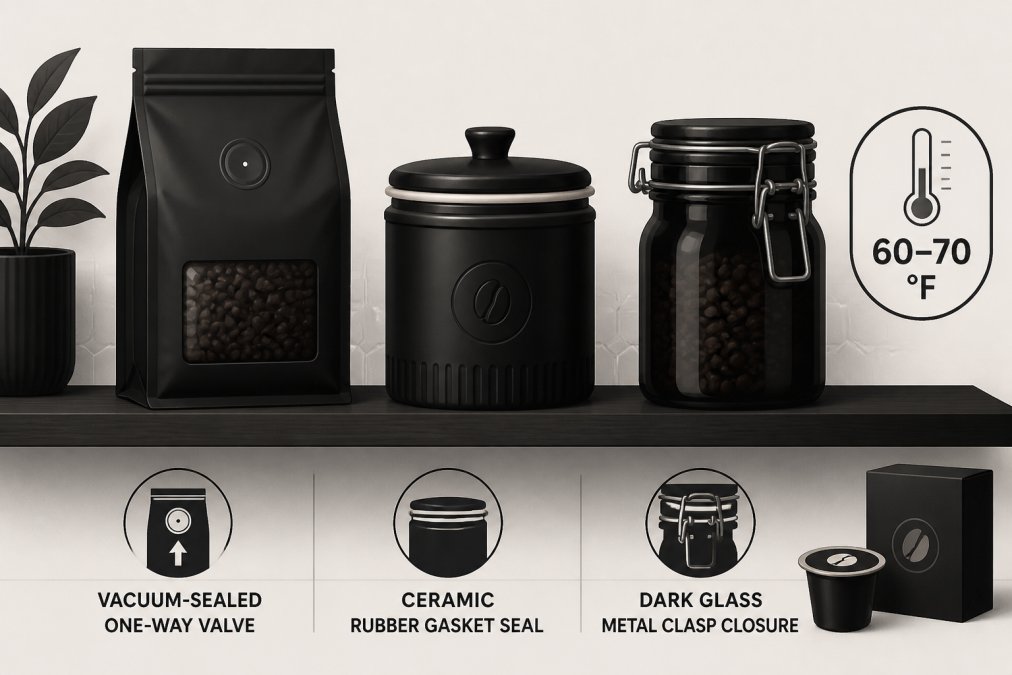
Vacuum-sealed bags with one-way valves are ideal for long-term storage. Once you open the bag, transfer beans to an airtight container. Glass jars with airtight seals work well, as do ceramic containers with rubber gaskets and high-quality plastic containers with tight-fitting lids.
Avoid clear containers if possible. Light exposure degrades coffee. Opaque containers are better. If you use a clear container, store it in a dark cabinet or pantry.
Test your container by filling it with water and tipping it upside down over a sink. If water drips, air is getting in. Never store coffee in its original grocery store bag if the bag doesn't have a proper seal. Transfer to a proper airtight container within a day of opening.
Environmental Factors: Light, Heat, and Humidity
Temperature stability matters more than most people realize. Coffee stored at room temperature (around 65-70°F) stays fresher longer than coffee stored in warm conditions. Heat accelerates oxidation. Never store coffee above a stove, near an oven, or in direct sunlight.
Humidity is also critical. Coffee is hygroscopic, meaning it absorbs moisture from the air. High humidity (above 70%) speeds up oxidation and can promote mold growth. If you live in a humid climate, consider using a small desiccant packet inside your storage container.
Light exposure degrades coffee through UV breakdown of aromatic compounds. Store beans in opaque or dark containers, away from windows and bright lights.
Avoid storing coffee in the refrigerator or freezer unless planning long-term storage. Cold temperatures slow oxidation, but condensation forms when cold beans warm up, introducing moisture. If you do freeze coffee, use an airtight, moisture-proof container and allow beans to come to room temperature before opening.
The ideal storage environment: a dark, cool, dry cabinet or pantry with stable temperatures between 60-75°F and humidity below 60%.
Why Coffee Roast Date Importance Matters
The roast date is the single most important piece of information on a coffee bag. Coffee is at its flavor peak between 5-14 days after roasting. After two weeks, flavor starts noticeably declining. After a month, most of the complexity is gone.
Grocery store coffee rarely displays a roast date. When it does, it's often months old. A "best by" date is misleading, it refers to when the coffee becomes undrinkable, not when it stops tasting good.
Specialty roasters stamp every bag with the roast date. This transparency exists because it's the only reliable way to know how fresh your coffee actually is. When you buy from a roaster that roasts to order, you know exactly when your beans were roasted, often just days before arrival.
If you're buying from a grocery store, check for a roast date and choose the most recent one available. If no roast date is visible, that's a red flag.
Whole Bean vs. Pre-Ground: A Freshness Comparison
Whole beans stay fresh significantly longer than pre-ground coffee. When you grind beans, you expose vastly more surface area to oxygen, accelerating oxidation exponentially. Pre-ground coffee can taste stale within days, even in sealed packaging.
Whole beans keep their aromatic compounds locked inside until you grind them. Once ground, those same compounds are exposed to air throughout the grounds, and oxidation accelerates dramatically.
Grocery store pre-ground coffee has been ground for weeks or months before you buy it. By the time you brew it, most of the flavor is already gone.
If you must buy pre-ground coffee, use it within 1-2 weeks of opening and store it in an airtight container in a cool, dark place. Better yet, invest in a burr grinder ($30-50) and buy whole beans. A month-old whole bean tastes better than pre-ground coffee that's a week old.
Brewing Adjustments for Older Beans
If you find yourself with stale beans, brewing adjustments can partially compensate for flavor loss.
Increase your brewing temperature slightly. Hotter water extracts more compounds from the beans. If you normally brew at 200°F, try 205°F.
Use a slightly higher coffee-to-water ratio. If you normally use a 1:16 ratio, try 1:15. The extra coffee helps compensate for missing aromatic compounds.
Grind slightly finer than usual. Finer grounds increase surface area, allowing more flavor extraction.
Brew longer. Extend your brewing time by 15-30 seconds.
These adjustments help, but they're band-aids on a larger problem. The real solution is buying fresher coffee and understanding that the few extra dollars spent on fresh roasted beans delivers dramatically better flavor than any brewing technique can salvage from stale grocery store coffee.
How Fresh Roasted Coffee Delivers Better Flavor
Fresh roasted coffee tastes incomparably better than stale grocery store coffee because all the aromatic compounds are intact and actively present. When you brew coffee that was roasted days ago instead of months ago, you're tasting the actual coffee, not the oxidized remnants.
Fresh coffee has brightness, sweetness, complexity, and nuance. You taste the specific origin characteristics, fruity notes from Ethiopian beans, chocolatey sweetness from Brazilian beans, floral qualities from Central American beans. These flavor profiles are completely absent in stale coffee.
The sensory experience is also different. Fresh coffee has a fuller body, richer mouthfeel, and more vibrant aroma. The crema on espresso is thicker and more stable. These differences reflect the presence of volatile compounds that have been lost in stale coffee.
Fresh roasted coffee also extracts more evenly. The residual CO2 helps distribute water through the grounds, leading to better extraction and more balanced flavor. Once you experience fresh roasted coffee, going back is nearly impossible.
Coffee Depot specializes in this exact advantage. Our coffee is roasted to order and shipped directly to you, ensuring maximum freshness. You're not buying beans that were roasted months ago and stored in warehouses. This roast-to-order model eliminates the entire supply chain delay that makes grocery store coffee stale.
The gap between store-bought coffee and fresh roasted coffee comes down to time. Every day that passes after roasting is a day your coffee loses flavor and complexity. If you're tired of drinking stale, flat coffee, the solution isn't a better brewing technique, it's fresher beans. Coffee Depot's roast-to-order model ensures your coffee arrives at peak freshness, with all the aromatic compounds intact and ready to deliver the unforgettable taste experience that coffee should provide. Start with our Mexico Coffee Pods or 12 Pack Single Serve Coffee Capsules and taste the difference freshness makes.


Frequently Asked Questions
How long does store-bought coffee stay fresh after opening?
Once opened, store-bought coffee begins losing aroma and flavor within 2-4 weeks, depending on storage conditions. Whole beans last longer than pre-ground coffee because grinding exposes more surface area to oxidation and volatile compound loss. Airtight containers and cool, dark storage extend freshness, but the clock starts the moment the bag is opened. Fresh roasted coffee delivered directly to your door minimizes time in transit and storage, preserving peak flavor longer than coffee sitting on grocery store shelves.
How can I tell if my coffee is stale?
Stale coffee shows several clear signs: the aroma becomes flat or muted, the flavor tastes bitter or lacks acidity and complexity, and pre-ground coffee may show oil buildup or clumping. Whole beans may appear dull rather than shiny, and the crema (foam) on brewed espresso disappears quickly. These indicate that volatile compounds and carbon dioxide have escaped, leaving behind a hollow, one-dimensional taste. Unlike expired coffee, stale coffee is still safe to drink but delivers an unpleasant experience.
Why is the roast date so important for coffee freshness?
The roast date marks when the beans completed their transformation and began oxidation. Coffee is most flavorful 5-14 days after roasting, when volatile compounds are optimal and degassing is complete. Grocery store coffee often lacks a visible roast date or lists one weeks or months old, meaning the beans have already lost peak flavor before you brew them. Knowing the exact roast date ensures you're buying beans at their prime, not after prolonged storage in warehouses or on shelves where light exposure, heat, and humidity degrade quality.
What's the best way to store coffee beans at home?
Store whole beans in an airtight container away from light, heat, and humidity. A vacuum-sealed bag with a one-way valve works well, or transfer beans to an opaque, airtight canister kept in a cool pantry (ideally 50-70°F). Avoid the refrigerator or freezer, as moisture and temperature fluctuations damage beans. Keep the container sealed between uses to minimize exposure to oxygen, which accelerates oxidation. Pre-ground coffee degrades faster, so grind only what you need immediately before brewing. Proper storage extends freshness by 2-4 weeks after opening.
This article was written using GrandRanker