

Podium Coffee Club vs Fresh Roasted Coffee
Table of Contents
- Head-to-Head Comparison: Podium Coffee Club vs Fresh Roasted Coffee
- How Coffee Subscription Services Work
- Roast-to-Order Coffee Benefits Explained
- Pricing Breakdown and Cost-Per-Cup Analysis
- Subscription Flexibility and Cancellation Policies
- How to Choose a Coffee Subscription That Matches Your Needs
- Best Coffee Subscription Services for Different Coffee Drinkers
- Storage, Shelf Life, and Packaging Integrity
- Which Service Should You Choose?
- Conclusion
Last Updated: August 18, 2026
Head-to-Head Comparison: Podium Coffee Club vs Fresh Roasted Coffee
When comparing podium coffee club vs fresh roasted coffee, you're evaluating two fundamentally different approaches to sourcing premium beans. Podium Coffee Club emphasizes a curated subscription model with consistent flavor profiles, while Fresh Roasted Coffee focuses on roast-to-order freshness delivered within days of roasting.
Coffee Depot approaches this comparison from the perspective of roast-to-order excellence. Our model ensures that your coffee is roasted after you order it, a commitment to freshness that reshapes how you experience your daily cup. According to the National Coffee Association's 2026 consumer survey, freshness ranks as the top quality factor for specialty coffee buyers, surpassing brand recognition and price.
Podium Coffee Club operates a traditional subscription model where beans are roasted on a schedule and shipped periodically. Fresh Roasted Coffee emphasizes on-demand roasting, pulling beans from inventory and roasting them after your order arrives. One guarantees consistency; the other guarantees maximum freshness.
How Coffee Subscription Services Work
Traditional subscription services like Podium Coffee Club pre-roast beans in batches, store them briefly, then ship to subscribers on fixed schedules. Your coffee arrives on predictable dates. This model optimizes roaster efficiency and shipping logistics.
Roast-to-order services function differently. You place an order, the roaster roasts your specific selection, and it ships within 24-48 hours of roasting. This model prioritizes freshness over predictability.
The operational difference creates distinct trade-offs. Subscription services offer convenience and budget predictability. Roast-to-order services demand flexibility but deliver maximum freshness. Most services now offer both models. Podium Coffee Club primarily emphasizes subscriptions, while Fresh Roasted Coffee leans heavily into roast-to-order. Coffee Depot combines both: you can subscribe for convenience or order on-demand for maximum freshness.
Roast-to-Order Coffee Benefits Explained
Roast-to-order coffee delivers one primary advantage that compounds over time: maximum freshness. When beans are roasted specifically for your order and shipped immediately, they reach your door at their sensory peak.
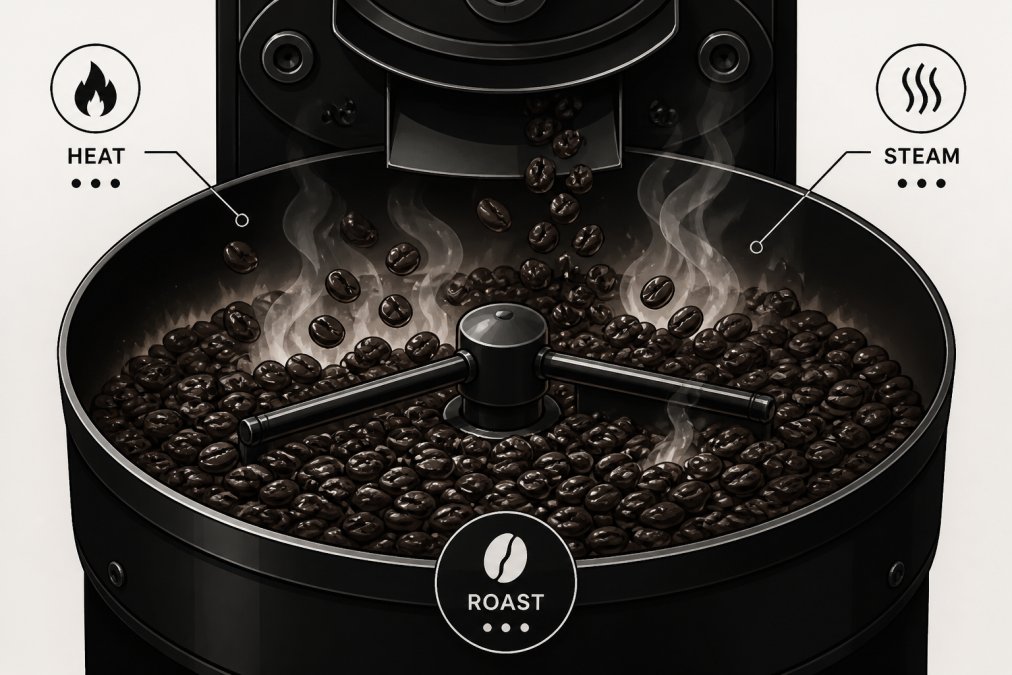
Coffee beans begin releasing volatile compounds immediately after roasting. Within the first two weeks, they're in their optimal flavor window. After four weeks, the aromatics flatten noticeably. A bean roasted on the day you order it will taste sharper, brighter, and more nuanced than one roasted three weeks prior.
This freshness advantage extends across all brew methods. Whether you're pulling espresso shots, brewing drip coffee, or making cold brew, fresher beans deliver more complexity. The difference is subtle with dark roasts but dramatic with light and medium roasts, where acidity and floral notes depend on volatile compounds that evaporate over time.
Freshness and Roast Date Guarantee
A roast date guarantee means the roaster stamps every package with the exact roasting date. This transparency lets you verify freshness yourself. Most roast-to-order services guarantee delivery within 7-10 days of roasting. Fresh Roasted Coffee typically delivers within 5-7 days of roasting. Coffee Depot commits to shipping within 48 hours of roasting, which means your beans arrive at maximum freshness.
The roast date matters more than the "best by" date printed on bags. A coffee with a best-by date six months away might have been roasted four months ago. The roast date tells you exactly when the flavor window opened.
Flavor Profile and Tasting Notes
Every coffee has a flavor profile shaped by origin, altitude, processing method, and roast level. Roast-to-order services emphasize tasting notes because freshness amplifies them. A Colombian single-origin roasted to highlight citrus and chocolate notes will express those characteristics far more vividly when fresh.
Coffee Depot's approach focuses on curated selections with detailed tasting notes. Our Best Sellers Sample Pack features six distinct flavor profiles: the 6 Bean Blend delivers deep, complex espresso notes; the Cowboy Blend emphasizes cocoa, caramel, and vanilla; the Breakfast Blend offers smooth, approachable South American character. Each roast is designed to highlight specific flavor dimensions.

Pricing Breakdown and Cost-Per-Cup Analysis
Pricing structures differ dramatically between subscription and roast-to-order models. Most competitors focus on monthly subscription price alone; few break down the true cost-per-cup including shipping, which is where real value emerges.
Subscription Model Pricing
Podium Coffee Club's pricing typically starts around $60-70 per month for a standard subscription. A typical subscription delivers 1-2 pounds of coffee monthly. Assuming 1.5 pounds (24 ounces) per month and a standard brew ratio of 1:16, you'll brew approximately 384 cups monthly. At $65 per month, that's $0.17 per cup.
However, this calculation assumes you consume all delivered coffee before it degrades. If you travel or reduce consumption seasonally, waste increases the real per-cup cost. A subscriber who receives $65 worth of coffee but consumes only 75% of it before flavor degradation effectively pays $0.23 per cup.
Roast-to-Order Pricing and Flexibility Cost
Fresh Roasted Coffee's roast-to-order model typically prices beans at $15-25 per pound depending on origin and roast level. A 12-ounce bag at $18 translates to $24 per pound, yielding approximately 192 cups at standard brew ratio, or $0.125 per cup.
But roast-to-order introduces shipping costs that subscriptions often waive. A typical roast-to-order shipment costs $6-10 for ground shipping. If you order one 12-ounce bag ($18) with $8 shipping, your total is $26 for 192 cups, or $0.135 per cup.
Coffee Depot's sample packs ($24.99 for six 2-ounce packs) offer the lowest entry-point cost-per-cup for exploration. A 2-ounce pack brews approximately 32 cups at standard ratio, yielding $0.13 per cup for discovery.
Multi-Month Cost Modeling
Scenario 1: Consistent 14-cup-per-week drinker (728 cups annually)
- Podium subscription: $65/month × 12 = $780 annually = $1.07 per cup
- Fresh Roasted roast-to-order: Approximately 61 orders annually at $18 + $8 shipping = $1,586 annually = $2.18 per cup
- Coffee Depot roast-to-order: $18.99 + $6 shipping = $1,499 annually = $2.06 per cup
Subscriptions win decisively if consumption is consistent.
Scenario 2: Variable 7-14-cup-per-week drinker (520 cups annually, with 30% waste)
- Podium subscription: $65/month × 12 = $780 annually, but 30% waste = $1.50 per cup (effective)
- Fresh Roasted roast-to-order: Approximately 43 orders annually at $18 + $8 shipping = $1,118 annually = $2.15 per cup
- Coffee Depot roast-to-order: $18.99 + $6 shipping = $1,055 annually = $2.03 per cup
Roast-to-order prevents waste and wins on effective cost, despite higher per-order pricing.
Scenario 3: Experimental drinker (trying 3-4 different roasts monthly, 480 cups annually)
- Podium subscription: $65/month × 12 = $780, but limited variety = $1.63 per cup (including waste)
- Coffee Depot sample packs: 12 sample packs annually at $24.99 each = $299.88, plus 4 regular orders at $18.99 + $6 = $95.96 = $0.83 per cup total
Sample packs offer lowest cost for variety seekers.
Shipping Cost Transparency
Shipping is the hidden variable most pricing comparisons ignore. Subscription services often waive or subsidize shipping, burying the cost in subscription fees. Roast-to-order services typically charge $6-10 per shipment.
Podium Coffee Club: Shipping typically included in subscription price (estimated $5-7 per month value). Fresh Roasted Coffee: $6-10 per order depending on weight and speed. Coffee Depot: $6 standard shipping, $10 expedited (2-day), free shipping on orders over $50.
Cost-Per-Cup Summary Table
| Service | Entry Price | Per-Cup Cost (Single Order) | Per-Cup Cost (Annual, Consistent) | Best For |
|---|---|---|---|---|
| Podium Coffee Club | $65/month | $0.17 | $1.07 | Consistent drinkers, convenience-focused |
| Fresh Roasted Coffee | $18-25/lb + $8 shipping | $0.135 | $2.18 | Freshness prioritizers, variable consumption |
| Coffee Depot Sample Packs | $24.99 | $0.13 | $0.83 (with variety) | Explorers, new customers |
| Coffee Depot Regular Orders | $18.99 + $6 shipping | $0.14 | $2.06 | Freshness + flexibility seekers |
Headline price is misleading. Podium's $65/month looks expensive until you model annual consumption; then it becomes the cheapest option for consistent drinkers. Roast-to-order services appear cheaper per order but compound shipping costs that subscriptions absorb.
Subscription Flexibility and Cancellation Policies
Subscription models require commitment; roast-to-order services prioritize flexibility.
Podium Coffee Club operates a traditional subscription with monthly billing. Cancellation requires explicit action before your next billing date, or you're charged again. This works for consistent drinkers but frustrates those with variable consumption patterns.
Fresh Roasted Coffee's roast-to-order model eliminates subscription friction entirely. You order when you need coffee. No recurring charges. No cancellation required.
Coffee Depot combines both. You can subscribe for convenience or order on-demand whenever you run low. If you subscribe and need to pause, you can skip months without canceling entirely. This flexibility appeals to remote workers and busy professionals whose schedules fluctuate.
How to Choose a Coffee Subscription That Matches Your Needs
The right choice depends on your brewing habits, flavor preferences, and lifestyle.

Start with consumption patterns. Count how many cups you drink weekly. If it's consistent (14-21 cups), subscriptions make sense. If it varies wildly, roast-to-order prevents waste. Coffee enthusiasts who experiment with different origins weekly benefit from flexibility. Those who find one roast they love benefit from subscription predictability.
Next, evaluate freshness priorities. If you taste coffee critically, noting acidity, body, aroma, and subtle flavor shifts, roast-to-order freshness matters enormously. If you drink coffee primarily for caffeine and general enjoyment, the freshness advantage is less pronounced.
Brew Method Compatibility
Your brewing equipment shapes which coffees work best. Espresso machines demand specific grind consistency and bean characteristics. Drip coffee makers are more forgiving.
Coffee Depot's 6 Bean Blend is explicitly designed for espresso, a bold, dark roast from six origins blended for body and crema. The House Blend works across all methods but shines in drip and pour-over applications.

If you use a Nespresso machine or other single-serve capsule system, most roast-to-order services don't offer compatible pods. This is a critical compatibility check before committing.
Sourcing Standards and Roaster Partnerships
Sourcing transparency matters to socially conscious drinkers. Some roasters emphasize direct trade relationships with specific farms. Others highlight fair trade certifications.
Coffee Depot partners directly with coffee-growing regions, emphasizing quality over volume. Our sourcing includes both natural and wet-mill washed processing techniques that support diverse ecosystems in high-elevation coffee-growing regions. Additionally, we donate $1 from every item sold to charity, embedding social responsibility into every transaction.
If sourcing ethics and environmental impact influence your purchase decisions, research each roaster's specific partnerships and certifications.
Best Coffee Subscription Services for Different Coffee Drinkers
| Coffee Drinker Profile | Best Choice | Why |
|---|---|---|
| Espresso enthusiasts | Coffee Depot 6 Bean Blend | Dark roast specifically designed for espresso machines |
| Flavor explorers | Coffee Depot Sample Packs | Six distinct profiles to discover preferences |
| Convenience-focused | Podium Coffee Club | Predictable monthly delivery, set-and-forget model |
| Freshness prioritizers | Fresh Roasted Coffee or Coffee Depot roast-to-order | Beans roasted within 48-72 hours of shipping |
| Budget-conscious drinkers | Coffee Depot on-demand ordering | Lower per-cup cost without subscription commitment |
| Socially conscious buyers | Coffee Depot | Charity donation with every purchase |
| Remote workers | Coffee Depot subscription with flexibility | Subscribe but skip months as needed |
Identify your top three priorities, then match them against the services.
Storage, Shelf Life, and Packaging Integrity
How you store coffee after arrival matters as much as roast date. Oxygen, light, heat, and moisture degrade coffee rapidly, and proper storage extends the flavor window by weeks, or shortens it by days if done incorrectly.
The Science of Coffee Degradation
Coffee beans begin releasing volatile aromatic compounds immediately after roasting. These compounds are highly unstable and escape into the air, oxidize, or polymerize into stale flavors within weeks.
The degradation timeline follows a predictable pattern:
- Days 1-3 post-roast: Beans are still off-gassing CO2. Flavor is developing but not yet stable.
- Days 4-14 post-roast: Peak flavor window. Volatile compounds are stable and expressive.
- Days 15-28 post-roast: Flavor begins flattening. Aromatic compounds escape or oxidize.
- Days 29-42 post-roast: Noticeable degradation. Flavor becomes muted and one-dimensional.
- Beyond 42 days: Coffee has lost 60-80% of its sensory complexity.
This timeline assumes proper storage. Poor storage can compress the peak window significantly.
Optimal Storage Conditions
Coffee degrades through four mechanisms: oxidation, photodegradation, volatile loss, and moisture absorption. Optimal storage eliminates all four.
Temperature: Cool, stable environment (60-70°F). Every 10-degree increase doubles the rate of chemical degradation. Avoid kitchens near ovens, stoves, or south-facing windows.
Light: Complete darkness. UV light degrades flavor compounds. Use opaque ceramic, metal, or dark glass containers.
Humidity: Dry environment (below 60% relative humidity). Coffee absorbs moisture from air, causing beans to swell and accelerating staling. Avoid kitchens above dishwashers or near sinks.
Oxygen: Airtight sealing. Oxygen causes rancidification of oils within beans. One-way valve bags allow CO2 to escape while preventing oxygen entry, ideal for short-term storage. Once opened, transfer beans to airtight containers.
Refrigerator and Freezer Storage: A Common Mistake
Many coffee drinkers believe refrigeration extends freshness. It does not. Refrigerators introduce temperature cycling and moisture exposure. Every time you open the refrigerator, beans experience expansion and contraction, damaging cell structure and accelerating staling. Condensation forms when cold beans warm to room temperature, introducing moisture that causes swelling and flavor degradation.
Freezer storage is worse. Freezing damages bean cell walls. When thawed, beans release moisture and aromatics rapidly.
Exception: Freezer storage is acceptable only if you're storing beans for 3+ months and plan to use them in cold brew. Use airtight, moisture-proof containers and thaw beans in the sealed container before opening.
Container Selection and Valve Bags
Roasters ship coffee in one-way valve bags designed for storage. These bags allow CO2 to escape while preventing oxygen from entering. They're excellent for 2-4 weeks of storage if kept sealed.
Once opened, transfer beans to an airtight container immediately. Options include:
Airtight canisters with rubber seals: Cost $10-30. Effectiveness: Excellent for 4-6 weeks.
Vacuum-seal containers: Cost $15-40. Effectiveness: Excellent for 6-8 weeks.
Ziplock bags with manual air removal: Cost $0.50 per bag. Effectiveness: Good for 2-3 weeks.
Original valve bags, kept sealed: Effectiveness: Excellent for 4-6 weeks.
Avoid clear containers, paper bags, or loosely sealed containers.
Packaging Quality Differences Between Services
Podium Coffee Club: Ships in standard one-way valve bags. Seals are reliable for 4-6 weeks if unopened.
Fresh Roasted Coffee: Uses professional-grade valve bags with reinforced seals. Seals maintain integrity for 6-8 weeks if unopened.
Coffee Depot: Emphasizes packaging integrity with premium valve bags and includes storage guidance with every order. Bags are designed to maintain freshness for 6-8 weeks if sealed. Sample packs use smaller 2-ounce bags that minimize air space, reducing oxidation risk.
Practical Storage Timeline
Week 1 (Days 1-7 post-roast): Beans are in peak window. Store in original sealed valve bag in cool, dark cabinet. Brew daily if possible.
Week 2 (Days 8-14 post-roast): Still in peak window. Consume regularly. Beans in sealed valve bag maintain full flavor.
Week 3 (Days 15-21 post-roast): Flavor begins flattening. Consume beans stored in airtight containers first.
Week 4+ (Days 22+ post-roast): Noticeable degradation. Use remaining beans in cold brew or espresso drinks where stale flavors are masked.
Storage and Roast-to-Order Advantage
Roast-to-order services gain a compounding advantage through storage. A bean roasted three days ago and stored properly for four weeks will taste better than a bean roasted 24 days ago and stored perfectly. The freshness head start matters.
If you receive Fresh Roasted Coffee beans roasted 5 days ago, you have approximately 9 days remaining in the peak flavor window. If you receive Podium Coffee Club beans roasted 14 days ago, you have 0 days remaining, you're already in the flattening phase.
Which Service Should You Choose?
The decision comes down to what you value most: convenience, freshness, cost, or flexibility.
Choose Podium Coffee Club if you drink coffee consistently, value subscription convenience, and want curated selections delivered on a predictable schedule.
Choose Fresh Roasted Coffee if freshness is your primary concern and you want maximum control over order timing.
Choose Coffee Depot if you want flexibility without sacrifice. Subscribe for convenience, order on-demand for freshness, explore sample packs to discover preferences, and support charity with every purchase. Our roast-to-order model means your coffee arrives within 48 hours of roasting. Our House Blend ($18.99) and 6 Bean Blend ($18.99) offer consistent quality for regular ordering, while our sample packs let you explore without commitment. We donate $1 from every item sold to charity, embedding social responsibility into your coffee ritual.

Most specialty coffee drinkers discover that freshness compounds, a bean roasted days ago tastes noticeably better than one roasted weeks ago, making roast-to-order worth the extra attention.
Choosing between podium coffee club vs fresh roasted coffee requires honest assessment of your consumption patterns and priorities. If you're a remote worker seeking elevated daily coffee experiences, freshness matters more than you might think. Coffee Depot's roast-to-order model ensures your beans arrive at peak freshness, while our expertly curated blends and single-origin selections deliver unforgettable taste experiences. Start with our Best Sellers Sample Pack ($24.99) or Single Origin Favorites Sample Pack ($24.99) to discover which flavor profiles resonate with you, then commit to regular ordering that matches your consumption. Every purchase supports local community through our $1-per-item charity donation. Get started with Coffee Depot and transform your daily brew into moments of pure joy.
Frequently Asked Questions
Is fresh roasted coffee actually better than store-bought?
Yes. Fresh roasted coffee retains more aromatic compounds and volatile flavor oils that deteriorate over time. Coffee roasted to order and shipped within days preserves peak flavor, acidity, and body that store-bought beans, often weeks or months old, cannot match. The difference is most noticeable in the first 2-3 weeks after roasting, when tasting notes are most vibrant and complex.
What should I look for in a high-quality coffee subscription?
Prioritize roast date transparency, sourcing standards (single-origin or award-winning roasters), and subscription flexibility. Verify that beans are roasted to order, not pre-roasted and warehoused. Check customization options for grind size and roast level, shipping frequency, and whether you can pause or cancel without penalty. Compare cost-per-cup across tiers, not just subscription price. Examine packaging to ensure freshness protection during transit.
How does roast-to-order coffee impact the flavor profile?
Roast-to-order preserves the full spectrum of tasting notes, acidity, body, aroma, and finish, by minimizing oxidation after roasting. Beans roasted weeks before delivery lose volatile compounds, resulting in flat, muted flavors. Fresh roasted coffee maintains complexity: fruity notes stay bright, chocolate notes stay rich, and the overall cup profile stays true to the roaster's intended cupping results. This is especially noticeable in light and medium roasts, which are more sensitive to age.
Is a coffee subscription worth the cost for daily drinkers?
For daily drinkers, subscription costs typically range from $0.70 to $1.50 per cup, comparable to specialty coffee shop prices but with superior freshness. The value depends on your baseline: if you buy $5 lattes daily, a subscription saves money while improving quality. If you brew budget grocery store coffee, the subscription costs more upfront but delivers noticeably better flavor, aroma, and satisfaction. Most daily drinkers find the freshness and customization justify the expense.
How long does fresh roasted coffee stay at its peak flavor?
Peak flavor window is 2-3 weeks after roasting. Beans begin to fade around day 14 as aromatic compounds oxidize, though they remain drinkable for 4-6 weeks if stored properly in an airtight container away from light and heat. Espresso beans peak slightly faster (10-14 days) due to their darker roast. Roast-to-order services time shipping to arrive during the peak window, maximizing the flavor you experience at home.
This article was written using GrandRanker