

How to Identify High Quality Coffee Beans: A 2026 Guide
Table of Contents
- Why Coffee Freshness Matters More Than You Think
- How to Tell if Coffee Beans Are Fresh
- Arabica vs. Robusta: Understanding Bean Varieties
- Coffee Roast Date vs. Expiration Date: What's the Real Difference?
- Origin, Processing, and Transparency in Quality Coffee
- How to Store Coffee Beans for Maximum Freshness
- Roast Levels and What They Tell You About Quality
- Building Your Sensory Skills: Learning to Taste Quality
Last Updated: August 23, 2026
Why Coffee Freshness Matters More Than You Think
Coffee is perishable. The moment beans are roasted, oxygen exposure, moisture, and time begin to degrade them. Most coffee drinkers assume grocery store whole beans are "fresh," but those bags may have sat in warehouses for months. A bag roasted six months ago is fundamentally different from one roasted six days ago.
At Coffee Depot, we roast to order and ship directly to you, ensuring genuine freshness. Freshness determines flavor complexity, aroma intensity, and overall brew quality. Understanding freshness is the foundation for identifying high quality coffee beans, but it's only part of the picture. You also need to recognize quality across multiple dimensions: the beans themselves, their origin, processing, and storage.
How to Tell if Coffee Beans Are Fresh
The most reliable indicator of freshness is the roast date printed on the bag. Look for a date within the last two to three weeks. Beans roasted within this window retain peak flavor compounds and aromatic volatiles (peer-reviewed research). After four weeks, complexity declines noticeably. After eight weeks, the coffee tastes flat.
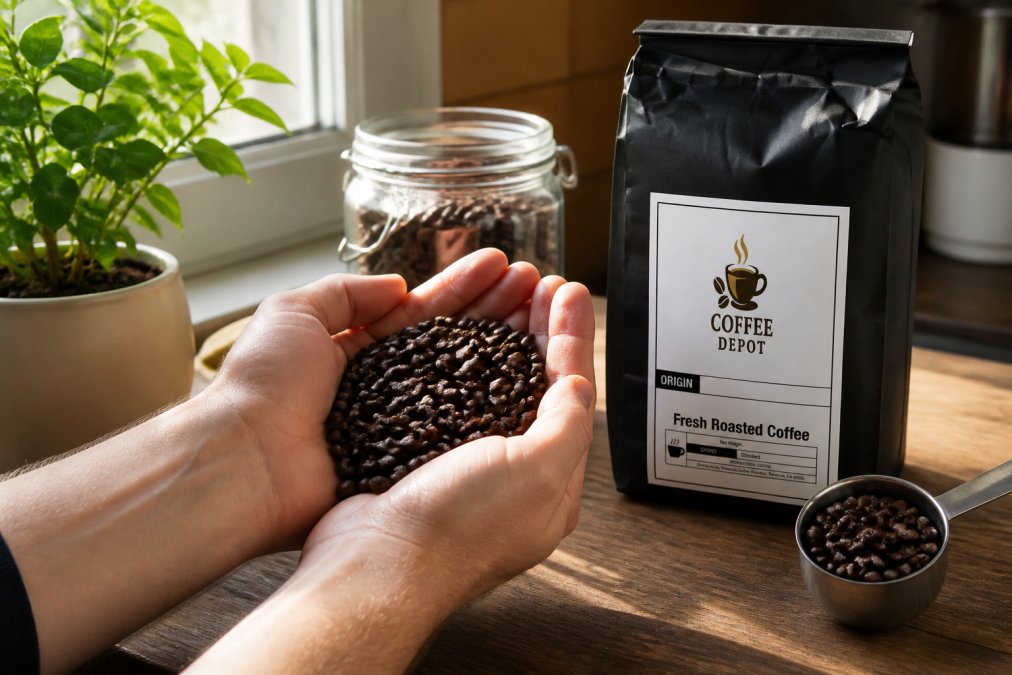
The Roast Date: Your First Quality Indicator
The roast date tells you when beans reached their peak potential, unlike an expiration date which indicates safety. Most specialty roasters print this date prominently. If you can't find it, that's a red flag.
Beans roasted two to four weeks ago are ideal for most brewing methods. During this window, the beans have finished degassing, the process where trapped carbon dioxide escapes, but flavor compounds remain vibrant. Older beans aren't necessarily bad; beans roasted six to eight weeks ago can still make acceptable coffee, especially darker roasts where subtle notes are already muted.
Visual Inspection: What Quality Beans Look Like
High quality beans have consistent appearance. Light roasts should be uniformly tan to light brown. Medium roasts should be consistent brown. Dark roasts should be dark brown, nearly black, without scorching.
Defects are visible: broken beans, chips, or fragments indicate poor quality green beans or careless handling. A few broken beans is normal, but excessive numbers signal quality control issues.
The surface reveals roast level and development. Light roasts have dry surfaces with minimal oil. Medium roasts show light sheen. Dark roasts display visible oil, which contributes to body and mouthfeel.
The Aroma Test
Fresh beans smell vibrant. Open a bag roasted within three weeks and the aroma should hit immediately, notes of chocolate, nuts, fruit, or flowers depending on origin and roast level. Stale beans smell muted and flat, sometimes developing cardboard or musty smells indicating oxidation or moisture exposure.
Arabica vs. Robusta: Understanding Bean Varieties
Two main species dominate the coffee market: Arabica and Robusta. Understanding the difference is essential for identifying high quality beans.
Arabica accounts for roughly 60-70% of global production (ico.org). It grows at higher altitudes in cooler climates, allowing complex flavor compounds to develop. Arabica offers nuanced profiles, higher acidity, and greater aromatic complexity, though it's more fragile and expensive to produce.
Robusta is hardier and contains roughly twice the caffeine (peer-reviewed research). It grows at lower altitudes in warmer climates, making it cheaper to cultivate. Robusta has heavier body and more bitter notes with less complexity. It's commonly used in espresso blends for crema and body, and in instant coffee.
When evaluating beans, check the label for species. Single-origin Arabica from a recognized growing region typically signals quality. Blends mixing Arabica and Robusta are acceptable if Arabica dominates.
Coffee Roast Date vs. Expiration Date: What's the Real Difference?
These dates serve completely different purposes. The roast date marks when beans were roasted, the date that matters most for flavor. Beans peak within two to four weeks of roasting, then gradually lose aromatic compounds and complexity.
An expiration date indicates when the product becomes unsafe. Coffee doesn't spoil traditionally and won't develop harmful bacteria if stored properly. An expiration date is more regulatory than a genuine safety threshold. Beans remain safe months or years after roasting, though flavor degrades significantly.
Many bags display expiration dates while omitting roast dates, a marketing tactic obscuring true age. A December 2026 expiration date reveals nothing about roast timing. It could mean August 2026 or March 2026, a dramatic freshness difference.
Prioritize the roast date over expiration dates. If a bag lacks a roast date, ask the seller or choose another brand.
Origin, Processing, and Transparency in Quality Coffee
Where coffee grows and how it's processed profoundly influence the final cup. These factors determine the bean's inherent characteristics before roasting.
Single-Origin vs. Blends
Single-origin coffee comes from a specific country, region, or farm. The label specifies the origin: Peru, Colombia, Ethiopia, Indonesia, or another coffee-producing nation. Single-origin beans showcase that region's terroir, altitude, climate, soil, and processing methods that shape flavor.
High-altitude beans develop slowly, allowing complex sugars and acids to develop, resulting in brighter acidity and nuanced notes. Lower-altitude beans have less acidity and heavier body.
Blends combine beans from multiple origins, balancing acidity, body, and flavor notes for a consistent, approachable cup. Quality blends aren't inferior to single-origins; they're different. Blends offer better balance and consistency, while single-origins offer more complexity and terroir expression.
The Best Sellers Sample Pack from Coffee Depot includes both single-origin options and blends. The Peru roast showcases high-altitude Peruvian coffee with notes of salted caramel and citrus.

Processing Methods and Their Impact
Coffee processing, the method removing fruit from the bean after harvest, dramatically affects flavor. Three main methods exist: washed, natural, and honey (pulped natural).
Washed processing removes all fruit before drying, producing cleaner, brighter profiles with pronounced acidity. Most specialty coffee uses this method for consistency and origin clarity.
Natural processing dries the entire fruit around the bean, then removes it, allowing the bean to absorb fruit sugars, resulting in sweeter, fruitier, heavier-bodied coffee with berry or wine-like notes.
Honey processing removes skin but leaves sticky fruit mucilage during drying, creating a middle ground offering both clarity and sweetness.
The processing method is often listed on the bag. Understanding it helps anticipate flavor profile and match your preference.
How to Store Coffee Beans for Maximum Freshness
Storage conditions directly impact how long beans maintain quality. Keep beans in an airtight container away from light, heat, and moisture. Oxygen accelerates oxidation, muting flavors and creating stale notes. Bags with one-way valves are acceptable for short-term storage; transfer to airtight containers for longer storage.
Light degrades coffee. UV rays break down flavor compounds and accelerate oxidation. Store beans in opaque containers or keep original bags in dark cabinets.
Heat speeds degradation. Room temperature is ideal. Avoid storage above stoves, near sunny windows, or anywhere warm. A cool, dark cabinet is perfect. Some freeze beans for long-term storage, which slows degradation significantly. Use airtight containers to prevent moisture absorption.
Humidity is a silent killer. Coffee is hygroscopic and absorbs moisture from air. Excess moisture leads to mold and flavor degradation. Keep beans away from sinks, dishwashers, and steam sources.
Most specialty coffee is best consumed within four weeks of roasting, when freshness and flavor complexity peak.
Roast Levels and What They Tell You About Quality
Roast level, light, medium, or dark, is a deliberate roaster choice revealing how they've decided to develop the beans' potential.
Light roasts preserve origin characteristics most prominently. Roasting stops before the first crack. They're bright, acidic, and display origin-specific notes like fruit, flowers, or tea-like qualities. Light roasts require precision because there's less margin for error.
Medium roasts balance origin characteristics with roast-induced flavors, continuing past the first crack but stopping before the second. They offer brightness to taste the origin plus body and caramel sweetness. Most drinkers find them approachable and balanced.
Dark roasts emphasize the roasting process itself, continuing until after the second crack. They're bold, heavy-bodied, displaying chocolate, molasses, or smoky notes. Origin characteristics are muted but present. Dark roasts are forgiving because roasting has already muted subtle flaws.
Quality exists at every roast level. Look for consistency, balance, and evidence the roaster understood their intention.
Building Your Sensory Skills: Learning to Taste Quality
Developing the ability to taste quality is learnable. You don't need professional expertise to recognize exceptional coffee.
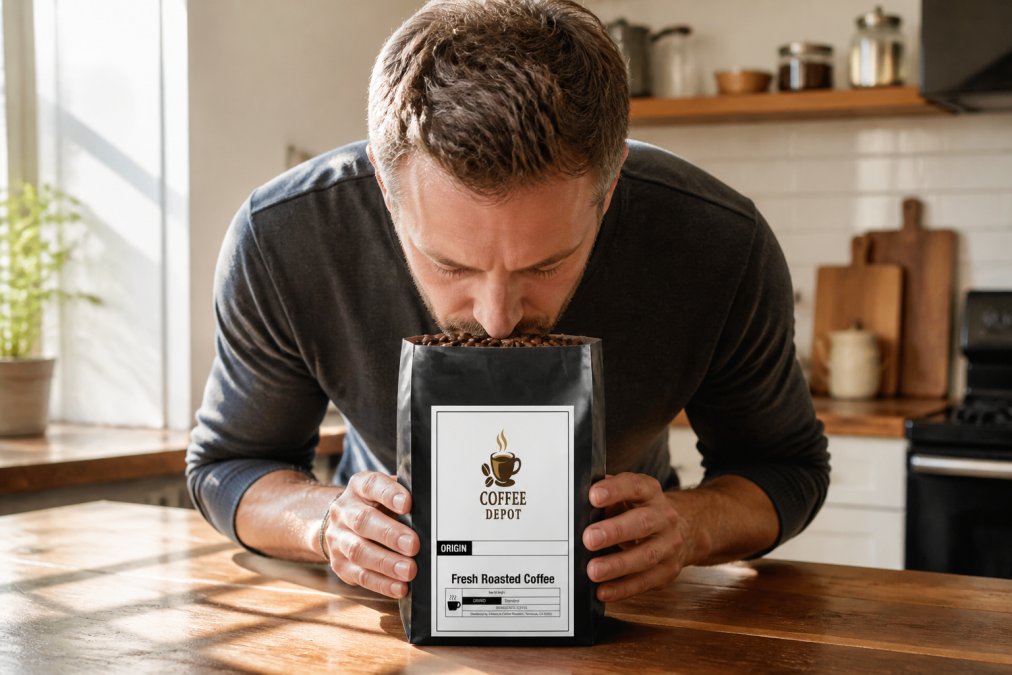
Before brewing, smell the beans and notice whether aroma is vibrant and complex or muted and flat. After brewing, smell the brewed coffee. Fresh, high-quality coffee has pronounced aroma matching the flavor notes on the bag.
Taste methodically. Take a small sip and hold it briefly before swallowing. Notice initial flavor, development as it warms, and aftertaste. High-quality coffee has smooth, balanced progression. Stale coffee tastes flat from the first sip.
Compare side by side. Brew two different coffees and taste back to back. The difference in vibrancy, complexity, and body becomes obvious, training your palate to recognize freshness and quality.
Keep notes on aroma, flavor notes, body, aftertaste, and enjoyment. Over time, you'll develop a framework for evaluating coffee and recognizing patterns in your preferences.
Explore the range. The Single Origin Favorites Sample Pack from Coffee Depot offers six different coffees in 2oz packs, perfect for sensory training. Taste Brazil Santos with cocoa notes, Colombia with dried orange and berry flavors, and others to build your palate quickly.

| Evaluation Criteria | What to Look For | Why It Matters |
|---|---|---|
| Roast Date | Within 2-4 weeks | Determines peak flavor window |
| Color Consistency | Uniform tone across batch | Indicates even roasting |
| Oil Surface | Present on medium/dark, minimal on light | Shows proper development |
| Aroma | Vibrant and complex | Signals freshness and quality |
| Origin Transparency | Specific country/region listed | Enables terroir evaluation |
| Processing Method | Listed on bag (washed/natural/honey) | Predicts flavor profile |
| Storage Conditions | Cool, dark, airtight | Preserves freshness |
| Taste Profile | Balanced, complex, smooth | Confirms quality execution |
Identifying high quality coffee beans combines objective signals and sensory evaluation. Start with roast date and visual inspection for immediate freshness and care information. Develop aroma and taste skills over time. Pay attention to origin, processing method, and transparency, which reveal roaster intention and quality standards.
Coffee Depot's approach of roasting to order and shipping directly eliminates grocery store uncertainty. You receive beans at peak freshness with clearly marked roast dates and full origin transparency. Whether you choose the Best Sellers Sample Pack to explore diverse roasts or the Single Origin Favorites to focus on terroir expression, you're starting with genuinely fresh, high-quality beans. Your sensory evaluation becomes the final judge.
Frequently Asked Questions
How can you tell if coffee beans are fresh just by looking at them?
Fresh coffee beans have a rich, uniform color without excessive oil on the surface (unless it's a dark roast). Look for beans that appear whole and unbroken, with no visible cracks or defects. Stale beans appear dull, faded, or have an uneven color. Check the roast date on the bag, beans roasted within the past 2-4 weeks are ideal. If there's no roast date listed, that's a red flag for quality.
Does the roast date matter more than the expiration date?
Yes, the roast date is far more important. Coffee doesn't truly expire, but it rapidly loses flavor after roasting. Peak freshness occurs within 2-4 weeks of the roast date. An expiration date printed months away doesn't guarantee quality, it just means the beans are technically safe. Coffee Depot roasts beans to order and ships directly to you, ensuring you receive beans at their flavor peak, not weeks after roasting.
What is the difference between Arabica and Robusta beans?
Arabica beans account for about 60-70% of global coffee and offer complex, nuanced flavors with higher acidity and lower body. They're grown at higher altitudes and are more delicate. Robusta beans are hardier, contain more caffeine, and deliver a stronger, more bitter taste with heavier body. Most specialty coffee focuses on Arabica because it produces more interesting flavor profiles. Understanding which variety you're buying helps set expectations for taste and quality.
How should I store coffee beans to keep them fresh?
Store whole beans in an airtight container away from heat, light, and moisture. A dark, cool pantry or cupboard is ideal, never refrigerate or freeze. Keep beans in their original bag if it has a one-way valve, or transfer to an airtight glass jar. Oxygen, heat, and humidity cause oxidation and staleness. Whole beans stay fresher longer than pre-ground coffee. Buy only what you'll use within 3-4 weeks, and grind just before brewing for maximum flavor retention.
What does single-origin coffee mean, and does it indicate quality?
Single-origin coffee comes from one specific region, farm, or country, allowing you to taste the unique characteristics of that terroir, altitude, climate, soil, and processing method. Single-origin coffees offer transparency and traceability, which often correlates with quality and fair trade practices. Coffee Depot's Single Origin Favorites Sample Pack lets you explore beans like Peru, Mexico, and Bali Blue, each with distinct flavor profiles shaped by their origin and processing.
What are the visual signs of low-quality coffee beans?
Low-quality beans show cracks, chips, or visible defects. They appear dull, faded, or inconsistently colored. Excessive oiliness on the surface (on light or medium roasts) suggests over-roasting or age. Beans that look shriveled or have uneven sizing indicate poor processing or storage. Lack of aroma when you open the bag is a major warning sign. Always check for a recent roast date and transparent sourcing information, beans without these details are often lower quality.
Why does bean density matter for coffee quality?
Bean density affects how coffee extracts during brewing. Higher-density beans, typically grown at higher altitudes, extract more slowly and produce more complex, balanced flavors. Lower-density beans extract quickly and can taste flat or one-dimensional. Altitude directly influences density, beans grown at 1,100-1,700 meters (like Coffee Depot's Peru) develop greater density and richer flavor profiles than lowland beans. Understanding density helps you choose beans that will brew well with your preferred method.
This article was written using GrandRanker