

Podium vs Atlas Coffee Club: Which Subscription Wins
Table of Contents
- Head-to-Head Comparison: Podium vs Atlas
- Best Coffee Subscription Services 2026: Where These Two Stand
- How to Choose a Coffee Subscription: Key Evaluation Criteria
- Fresh Roasted Coffee Delivery Benefits: Why These Services Matter
- Cancellation Friction: Which Service Respects Your Choice
- Long-Term Cost-Benefit Analysis
- Which One Should You Choose?
- Conclusion
Last Updated: August 23, 2026
Head-to-Head Comparison: Podium vs Atlas
When choosing between specialty coffee subscriptions, the decision comes down to freshness, sourcing philosophy, and how seamlessly the service fits your brewing routine. Podium Coffee Club and Atlas Coffee Club have built loyal followings, but they approach the coffee subscription comparison differently. Podium emphasizes artisanal roasting and direct sourcing relationships, while Atlas leans into variety and educational discovery. Neither is objectively "better," but one will align more closely with what you actually want.
Subscription Model and Pricing
Podium operates on a straightforward recurring delivery model where customers define their schedule, typically monthly but adjustable. Their entry-level tier starts at a mid-range price point for specialty coffee, with options to upgrade frequency or volume.
Atlas offers similar subscription service with more granular control. You can skip months without penalty, choose specific origins before shipment, and adjust quantities on the fly. This flexibility comes with a slightly higher starting price.
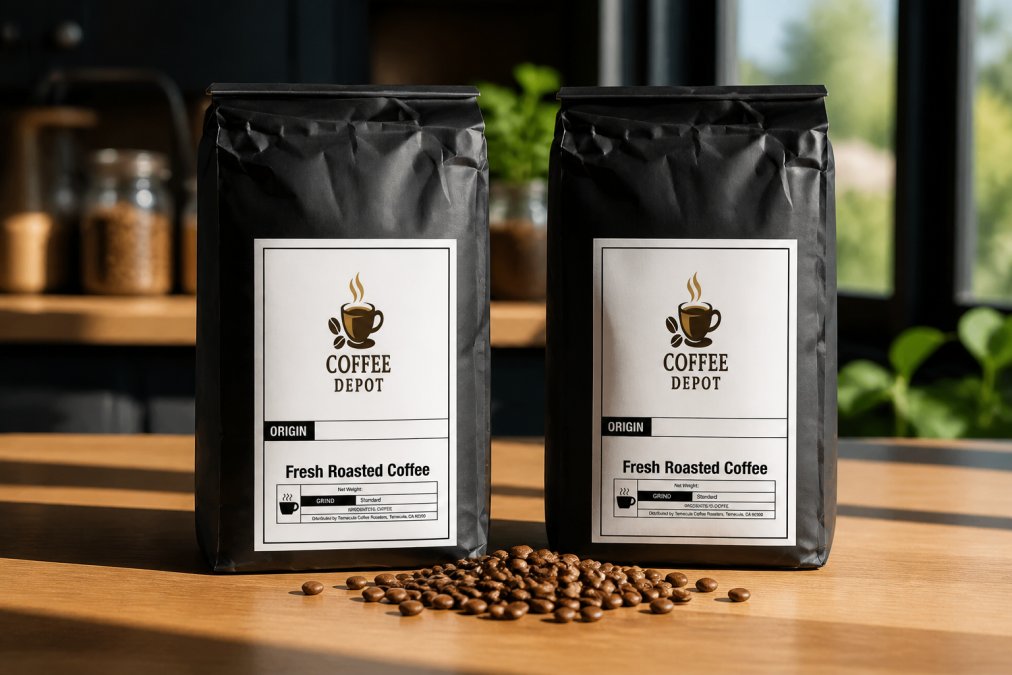
Coffee Depot's roast-to-order model ensures maximum freshness: coffee is not brewed until you order it, then shipped directly to you. Their sample packs, like the Best Sellers Sample Pack at $24.99, let you explore multiple roasts without recurring commitment.

Roast Dates and Freshness Guarantees
Podium roasts to order and ships within days, printing roast dates prominently on every bag. The window between roasting and arrival typically spans 3-5 days, which is genuinely fresh by specialty coffee standards.
Atlas also roasts fresh, but their logistics add an extra 1-2 days to the timeline in many regions. For coffee that peaks in flavor 5-14 days post-roast, both services land you beans well within the optimal window (peer-reviewed research).
Coffee Depot operates under the same principle: your order triggers the roast, ensuring you receive beans at their flavor peak.
Sourcing and Origin Variety
Podium maintains direct relationships with a smaller number of farms, rotating through seasonal single-origins. Their catalog typically features 4-6 active single-origins at any given time, plus house blends. This creates consistency in sourcing ethics and allows them to highlight specific producers by name.
Atlas sources more broadly, partnering with importers across multiple regions and rotating through 8-12 origins monthly. This means more variety month-to-month, but less depth into individual producer stories.
Coffee Depot's sourcing emphasizes both single-origin selections and expertly curated blends. Their Single Origin Favorites Sample Pack ($24.99) showcases beans from Brazil, Colombia, Costa Rica, Ethiopia, Honduras, and Tanzania, each with distinct tasting profiles.

Flavor Profile Customization
Podium ships what they've roasted for the month; you can't customize flavor profiles within a subscription cycle. You choose your subscription tier (light, medium, dark roasts), but the specific beans are their selection.
Atlas lets you preview upcoming coffees and select which ones arrive in your box. Want to skip the light African roast and double up on the dark Brazilian? You can.
Coffee Depot's sample packs and individual purchases let you cherry-pick exactly what you want. The Flavored Coffees Sample Pack ($24.99) includes French Vanilla, Hazelnut, Cinnabun, Caramel, Mocha, and Cinnamon Hazelnut, so you can taste-test flavor profiles before committing to larger quantities.
Shipping Frequency and Logistics
Podium ships on a fixed monthly schedule by default, though you can adjust to every 2-3 weeks. Shipping costs are bundled into subscription pricing. Delivery typically takes 3-5 business days once the roast ships.
Atlas offers more flexibility: monthly, bi-weekly, or custom intervals. You can pause individual months without losing your subscription. Shipping is faster in some regions (2-3 days) due to their distribution network.
Both services handle logistics competently. The real question is whether you want the simplicity of a fixed schedule (Podium) or the flexibility to adjust on demand (Atlas).
Best Coffee Subscription Services 2026: Where These Two Stand
The specialty coffee subscription market has matured significantly. Podium and Atlas represent two viable approaches, but they're not the only options worth considering.
Coffee Depot stands apart by prioritizing roast-to-order freshness without forcing a subscription model. If you value maximum freshness and the ability to explore multiple origins without recurring commitment, the sample packs offer the best entry point.
Other notable services in 2026 include specialists focused on specific regions and budget-friendly options that sacrifice freshness for price. Podium and Atlas occupy the middle ground: premium pricing justified by actual freshness.
The key differentiation isn't between Podium and Atlas, it's between services that roast to order versus those that roast in bulk and warehouse. Any service claiming "fresh" coffee but roasting weeks before shipment is cutting corners on flavor.
How to Choose a Coffee Subscription: Key Evaluation Criteria
Selecting a coffee subscription comparison requires clarity on what actually matters to your daily routine.
Freshness and Roast-to-Order Priority
If maximum freshness is non-negotiable, roast-to-order is the only criterion that matters. Podium delivers this. Atlas comes close but adds a few extra days. Coffee Depot delivers the same roast-to-order guarantee with more flexibility on commitment.
The practical difference: beans roasted 3 days ago versus 7 days ago is noticeable to trained palates. Espresso is most sensitive to roast date; crema quality drops noticeably after 10 days (peer-reviewed research). Pour-over and French press are more forgiving.
Flexibility and Commitment Level
Podium assumes you want a recurring subscription and makes pausing easier than canceling. This is intentional friction designed to encourage retention.
Atlas removes that friction entirely. You can skip months, adjust quantities, and cancel with no penalty. This appeals to those with erratic consumption patterns.
Coffee Depot's sample pack model eliminates the commitment question entirely. You buy what you want, when you want it. No subscription, no pause buttons, no cancellation conversations.
Brewing Method Compatibility
Your brewing equipment should inform your coffee selection. Light roasts shine in pour-over and Aeropress. Medium roasts work across all methods. Dark roasts are essential for espresso machines where you need body and intensity.
Podium's subscription tier system (light/medium/dark) handles this reasonably well. Atlas lets you pick specific beans for complete control. Coffee Depot's sample packs and individual purchases give you the same control as Atlas, with no subscription overhead.
Fresh Roasted Coffee Delivery Benefits: Why These Services Matter
The rise of fresh roasted coffee delivery services reflects a fundamental shift in how enthusiasts approach their daily brew. Traditional grocery store coffee sits in bags for weeks or months. Fresh roasted delivery services compress that timeline to days. Coffee peaks in flavor 5-14 days post-roast, and most delivery services land you beans right in that window (peer-reviewed research).
Beyond freshness, these services offer discovery and education. Tasting notes, brewing recommendations, and origin stories transform coffee from a commodity into an experience. You learn what "floral" means in an Ethiopian bean, why altitude affects acidity, and how processing method shapes flavor.

Coffee Depot embodies this philosophy. Every order is roasted fresh, and their curated blends come with tasting notes designed to help you understand what you're experiencing.
Cancellation Friction: Which Service Respects Your Choice
Podium makes cancellation possible but not convenient. You can do it, but it requires contacting customer service. This is intentional friction designed to encourage pausing instead of canceling.
Atlas built cancellation into their account dashboard. One click, and you're done. No email required. This reflects a philosophy that respects customer autonomy and often increases retention because customers feel respected.
Coffee Depot's model sidesteps this entirely. No subscription means no cancellation friction. You order what you want, when you want it. If you don't reorder for six months, nothing happens.
Long-Term Cost-Benefit Analysis
Comparing cost requires looking beyond per-bag price. Podium's bundled shipping makes monthly costs predictable. For a regular drinker consuming one bag per week, monthly costs run roughly $70-80, or $17.50-20 per bag all-in.
Atlas's variable pricing means your cost depends on what you order. Typical monthly spending runs $60-75, or $15-18 per bag.
Coffee Depot's sample packs ($24.99 for six 2oz packs) break down to roughly $33 per 12oz equivalent bag. Individual full-size bags run $18.99 for blends, making per-unit costs comparable to Atlas. But there's no subscription overhead, and you only buy what you'll drink.
If you'll consistently drink specialty coffee for the next year, a subscription saves money. If your consumption is irregular or you want to explore before committing, sample packs and individual purchases make more sense.
Which One Should You Choose?
Choose Podium if:
- You've identified your preferred roast level and trust expert curation
- You want the simplest possible experience, set it and forget it
- You value producer relationships and want to support specific farms
Choose Atlas if:
- You want complete control over what arrives each month
- You have variable coffee consumption and need flexibility to pause or adjust
- You enjoy discovery and want exposure to new origins regularly
Choose Coffee Depot if:
- You prioritize roast-to-order freshness without subscription commitment
- You want to explore multiple origins and flavor profiles before settling on favorites
- You prefer ordering exactly what you want, when you want it
If you're new to specialty coffee, Coffee Depot's sample packs offer the lowest-risk entry point. The Best Sellers Sample Pack and Single Origin Favorites Sample Pack let you taste across their range without recurring charges. Once you identify your preferences, you can commit to a subscription service or continue ordering à la carte.
The coffee subscription landscape rewards clarity about what you actually want. Podium and Atlas are both legitimate choices, but they're built for different customers. Coffee Depot's roast-to-order model with flexible ordering gives you the freshness advantage of a subscription service without the commitment friction. Start with their sample packs to understand your preferences, then decide whether a recurring subscription aligns with your routine. The best coffee subscription isn't the one with the slickest marketing, it's the one that respects how you actually drink coffee.
Frequently Asked Questions
Q: What's the main difference between Podium Coffee Club and Atlas Coffee Club?
Podium emphasizes roast-to-order freshness and direct-trade sourcing relationships, while Atlas focuses on global origin variety and curated single-origin selections. Both prioritize freshness, but their sourcing philosophies and subscription flexibility differ significantly. Your choice depends on whether you prioritize speed-to-roast or origin exploration.
Q: How do these coffee subscription services ensure freshness?
Both Podium and Atlas roast coffee to order or within days of shipment, printing roast dates on every bag. Fresh roasted coffee delivery benefits include peak flavor within 2-4 weeks of roasting, fuller aroma, and more vibrant acidity than grocery store beans that may be months old. Always check the roast date on arrival to verify freshness.
Q: Can I pause or cancel my subscription without penalties?
Cancellation policies vary between services. Both Podium and Atlas allow cancellations, but the friction level differs. Before subscribing, confirm whether you can pause (skip a month) or cancel instantly without explanation. This flexibility matters if you're a remote worker who consumes coffee inconsistently or prefers to order on-demand rather than commit to recurring deliveries.
Q: How do I choose the best coffee subscription for my brewing method?
Match your subscription to your equipment: espresso machines benefit from darker roasts and specific body profiles, while pour-over and French press users prefer medium roasts with balanced acidity. When choosing a coffee subscription, verify that the service provides your preferred grind and roast level consistency. Some services allow you to specify brewing method preferences, which helps their roasters select beans with compatible flavor profiles and body weight.
Q: Are these coffee subscriptions worth the cost compared to buying at specialty shops?
A long-term cost-benefit analysis shows subscription services typically cost $0.50-$0.75 per cup, while specialty coffee shops charge $5-$7 per drink. Over a year, a home subscription ($15-$20 monthly) costs roughly $180-$240, versus $1,500+ for regular café visits. However, upfront brewing equipment (grinder, brewer) adds $50-$300. Subscriptions offer convenience, freshness guarantees, and direct-to-consumer pricing that specialty retailers cannot match, making them ideal for enthusiasts who brew daily at home.
This article was written using GrandRanker