

What Is Specialty Grade Coffee Exactly? A 2026 Guide
Table of Contents
- The 100-Point Scale: How Coffee Earns a Specialty Grade
- SCA Coffee Grading Standards: What the Q-Grader Looks For
- Specialty Coffee vs Commercial Coffee: The Real Differences
- Coffee Bean Freshness Guide: Why Roast Date Matters More Than the Label
- Processing Methods and Altitude: How They Shape Flavor
- Common Misconceptions About Specialty Grade Coffee
- How to Verify Specialty Coffee as a Consumer
- Frequently Asked Questions
Last Updated: September 15, 2026
The 100-Point Scale: How Coffee Earns a Specialty Grade
Specialty grade coffee scores 80 points or higher on a 100-point scale, is free of primary defects, and carries documented traceability to its origin (Standards). That definition matters because a bag's label tells you almost nothing on its own, a score does.
The scale itself grew out of a practical problem: buyers needed a shared language for quality. Specialty Coffee Association cupping standards and protocols formalized that language, and graders still use it today. Licensed Q-Graders evaluate samples in a controlled setting, scoring categories like fragrance, flavor, acidity, body, balance, sweetness, and aftertaste. Six categories are scored on a 6-to-10 scale; the total is tallied out of 100.
Here's what most shoppers miss: an 84-point coffee can taste flat to you, while an 81-point coffee might be exactly what you want with breakfast. The score measures technical quality, not personal preference. Below, I'll cover how grading works, what separates specialty from commercial coffee, and how to verify a bag.
At Coffee Depot, we built our entire model around one idea: roast-to-order freshness. Coffee isn't brewed until you order it, then it ships straight to you. That single decision changes what lands in your cup more than any score ever will.
SCA Coffee Grading Standards: What the Q-Grader Looks For
A Q-Grader is a licensed coffee professional certified through the Coffee Quality Institute to evaluate green coffee against standardized protocols, passing sensory and written exams and renewing on a recurring cycle. That license makes a score meaningful rather than arbitrary.
Graders work with green coffee, where defects are easier to spot. A grader pulls a 350-gram sample, spreads it on a dark surface, and counts defects against a reference chart (Standards). Primary defects, full black beans, full sour beans, severe insect damage, foreign matter, disqualify a lot outright if even one appears. Secondary defects, partial black, partial sour, broken beans, slight insect damage, accumulate, with a defined number equivalent to one primary defect. That math separates a lot that qualifies for cupping from one that never reaches the table.
Only after the green sample passes defect screening does the coffee get roasted, rested, and cupped. The grading criteria break down roughly like this:
- Defect count: Determines whether the lot qualifies for specialty consideration at all
- Cupping score: Sensory evaluation across multiple categories, tallied out of 100
- Uniformity: Consistency across the five cups in a single sample, a single outlier cup drags the score
- Clean cup: Absence of off-flavors or taints across all five cups
- Sweetness: Perceived sugar-like quality, scored separately from overall flavor
- Moisture content and screen size: Physical measurements that affect roast behavior and lot consistency
Most guides treat the score as a single number. It's actually a profile: two coffees can both hit 85 and share almost nothing, one earning points on acidity and clarity, the other on body and sweetness. The category breakdown is where the real information lives.
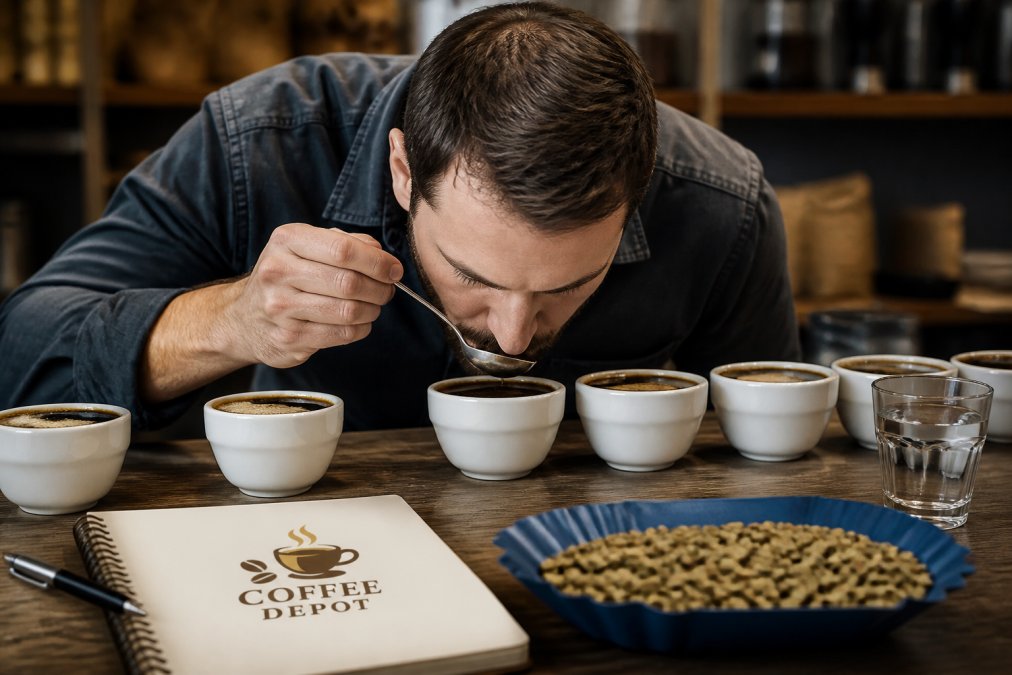
The Cupping Protocol: Aroma, Acidity, Body, and Balance
Cupping is the standardized tasting method for evaluating coffee. A grader measures a fixed dose, traditionally 8.25 grams per cup, adds water just off boil, lets the crust form, breaks it at a set interval, and tastes with a spoon as the coffee cools. Timing matters as much as technique, because different compounds express at different temperatures.
Fragrance is evaluated on the dry grounds; aroma on the wet slurry. Acidity describes brightness and liveliness, not sourness. Body is the tactile weight on your tongue, from tea-like to syrupy. Balance asks whether those elements work together. Aftertaste measures how long flavor lingers and whether it stays pleasant. Sweetness is scored separately as a marker of ripe, well-processed fruit.
Flavor clarity is the through-line. A clean cup lets you taste distinct notes instead of a muddy blend of everything.
How Processing Method Moves the Score
Most grading explainers skip this: the same variety grown on the same farm can score differently depending on processing, which controls how much fruit character stays with the bean and how clean the final cup reads.
Washed coffees have the fruit stripped before drying, producing a cleaner cup with pronounced acidity and clearer origin expression, the profile graders reward on acidity and clean-cup categories. Natural coffees dry with fruit on the bean, pushing sweetness and berry notes but raising the risk of ferment defects that can knock a lot out of specialty range. Honey processing leaves some mucilage attached during drying; the amount left on, white, yellow, red, black, changes how much sweetness and body come through.
A washed Ethiopian micro-lot and a natural-process Brazilian bean can both score 86 and taste completely different. The score tells you the raw material was sound; the processing method tells you what kind of cup you're buying.
Specialty Coffee vs Commercial Coffee: The Real Differences
The gap between specialty and commercial coffee comes down to three things: score threshold, defect tolerance, and traceability. Commercial coffee typically falls below 80 points, allows more defects, and often arrives as a blend of anonymous origins. Specialty coffee clears the threshold and traces to a specific farm, cooperative, or micro-lot.
That traceability isn't decoration, it lets a roaster adjust a roast profile to a specific bean's density, moisture, and processing. Commercial blends are built for consistency across huge volumes, so the roast works for a moving target; the roaster can't dial in for a single lot because the lot changes every few weeks.
Specialty coffee commands higher prices at origin, and a meaningful share of that premium reaches growers through direct trade. Fair trade sets a floor price; direct trade often goes further by cutting out intermediaries and paying based on quality.
Beyond the Score: Traceability and Direct Trade
How to Verify a Bag Is Actually Specialty
Coffee Bean Freshness Guide: Why Roast Date Matters More Than the Label
What to look for on the bag:
Processing Methods and Altitude: How They Shape Flavor
Common Misconceptions About Specialty Grade Coffee
How to Verify Specialty Coffee as a Consumer
A quick verification checklist:
Frequently Asked Questions
What is the difference between regular coffee and specialty coffee?
Regular or commercial coffee typically scores below 80 points on the SCA 100-point scale and may contain defects like mold, insect damage, or uneven roast. Specialty grade coffee scores 80 or higher, has zero primary defects, and is evaluated by a licensed Q-Grader for flavor clarity, sweetness, and balance. The difference shows up in the cup: commercial coffee tastes flat or bitter, while specialty coffee offers distinct flavor notes and a clean finish.
What qualifies as specialty coffee according to the SCA?
The Specialty Coffee Association (SCA) requires green coffee to score at least 80 points on its 100-point scale. A licensed Q-Grader evaluates the coffee across attributes including aroma, acidity, body, balance, sweetness, and aftertaste. The coffee must also have zero primary defects (like full black or sour beans) and no more than five secondary defects. Only then can it be called specialty grade.
How does the Q-Grader system work?
Q-Graders are licensed professionals who pass a rigorous exam to evaluate coffee using SCA protocols. They cup coffees blind, scoring each attribute on a 6 to 10 scale. The total score determines the grade: 80-84.99 is Very Good, 85-89.99 is Excellent, and 90+ is Outstanding. Q-Graders also identify defects that can disqualify a coffee from specialty status. Their role ensures consistency and credibility in the specialty coffee supply chain.
Does specialty coffee have to be single-origin?
No. Specialty coffee can be a blend or a single-origin. What matters is that the coffee meets the SCA's grading criteria, regardless of origin. Blends can score just as high as single-origins if the components are high-quality and the roast profile is well-executed. Many roasters create signature blends that highlight specific flavor notes while maintaining specialty grade. The key is traceability and quality, not origin count.
Is specialty coffee healthier than commercial grade coffee?
Specialty coffee is not necessarily healthier in terms of nutrition, but it is often cleaner. Because it must have zero primary defects and is rigorously screened, it is less likely to contain mold, insect fragments, or over-fermented beans. Some research suggests that higher-quality beans also have more antioxidants, but the main benefit is a better-tasting cup with fewer off-flavors. If you want to avoid potential contaminants, specialty grade is a safer choice.
How can I tell if a coffee is truly specialty grade?
Look for the roast date, origin information, and the roaster's transparency about sourcing. Many specialty roasters list the SCA score or Q-Grader certification on the bag. You can also check if the roaster is a member of the Specialty Coffee Association. Avoid bags with vague terms like 'gourmet' or 'premium' without specifics. Finally, buy from roasters who roast to order, like Coffee Depot, so you know the coffee is fresh and not sitting on a shelf.
The challenge with specialty grade coffee is that the label alone proves nothing. You need a roast date, an origin, and a roaster willing to show their work. Coffee Depot roasts every order after it's placed, ships it straight to you, and donates $1 from every item sold to charity, so the coffee in your cup is as fresh as the sourcing behind it is transparent. Explore the single-origin lineup and taste the difference a roast date makes.